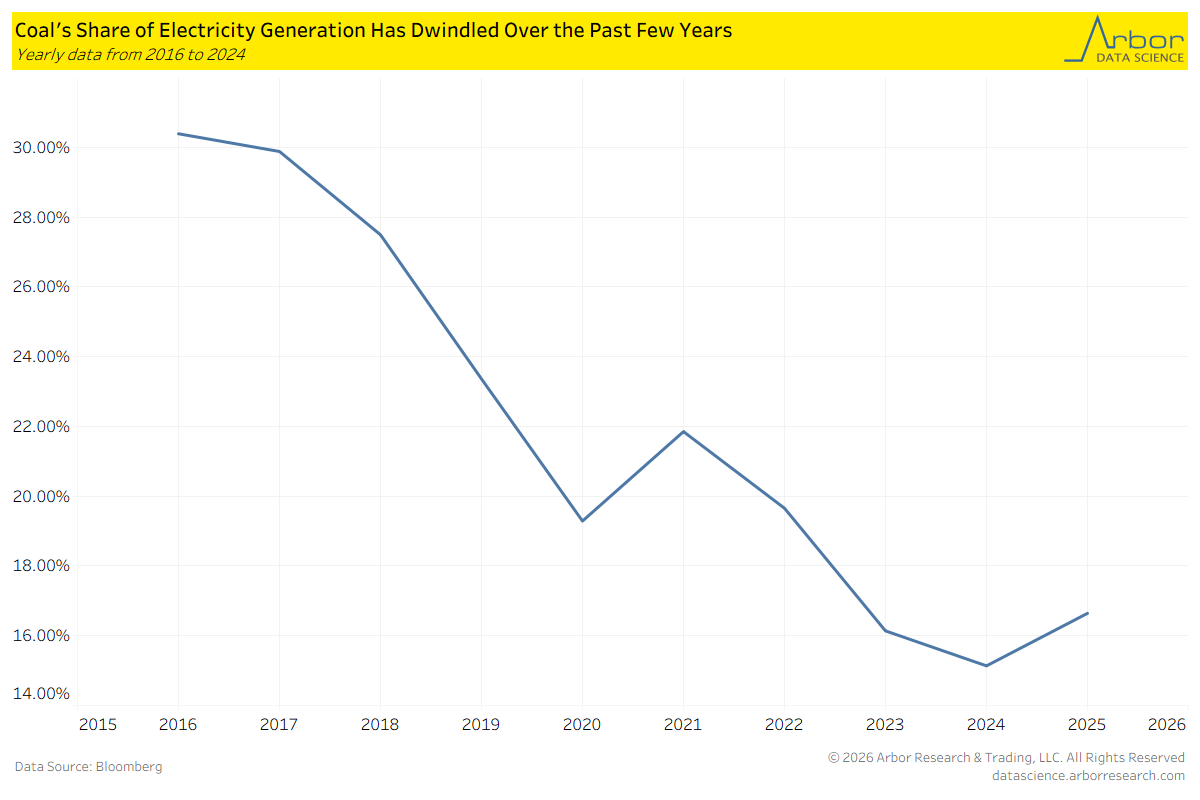
Coal consumption in the U.S. has experienced a steep decline over the last few years. In 2016, coal usage comprised 30.29% of electricity generated in the nation — already significantly lower than the 50% share in the early 2000s. Coal’s share steadily declined in the following years, dropping down to 16.64% in 2025 as natural gas became the most used energy source.
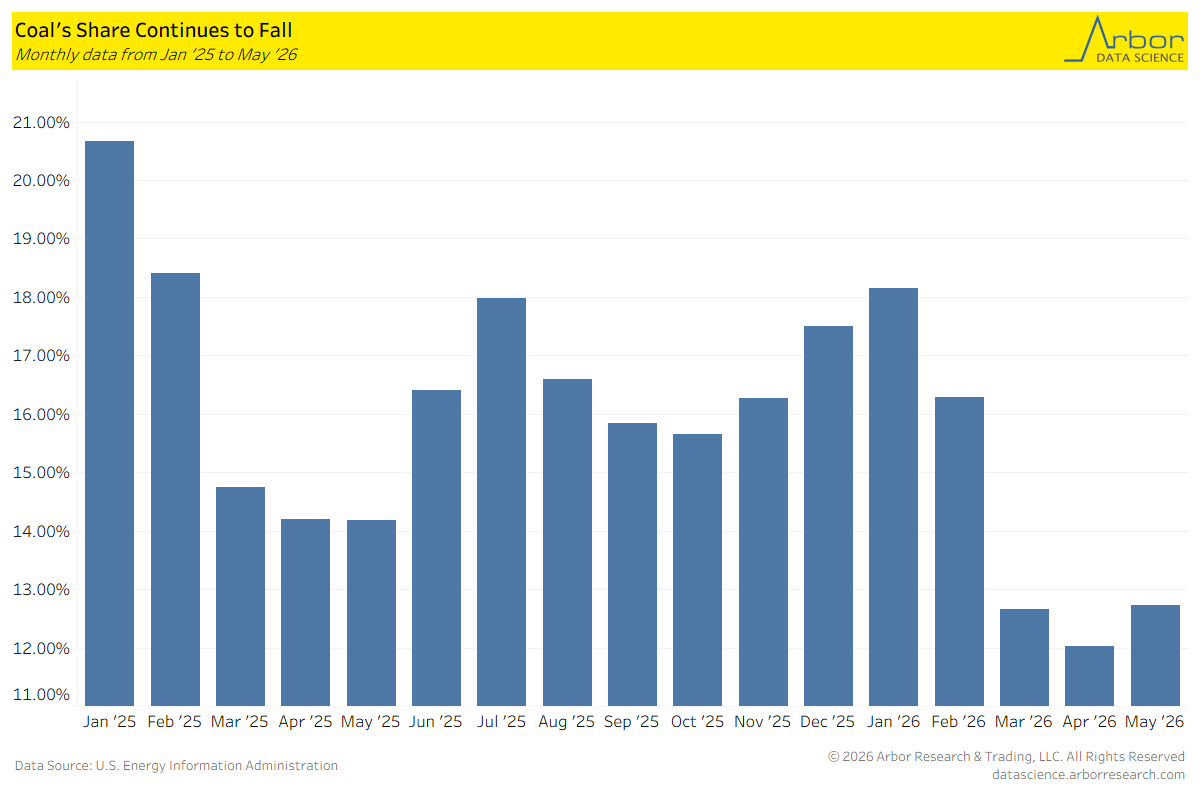
A closer look at coal usage indicates that its share has fallen even further. While monthly data may exhibit signs of seasonality, the broader trend points towards a continued decline in coal usage, relative to other alternatives.
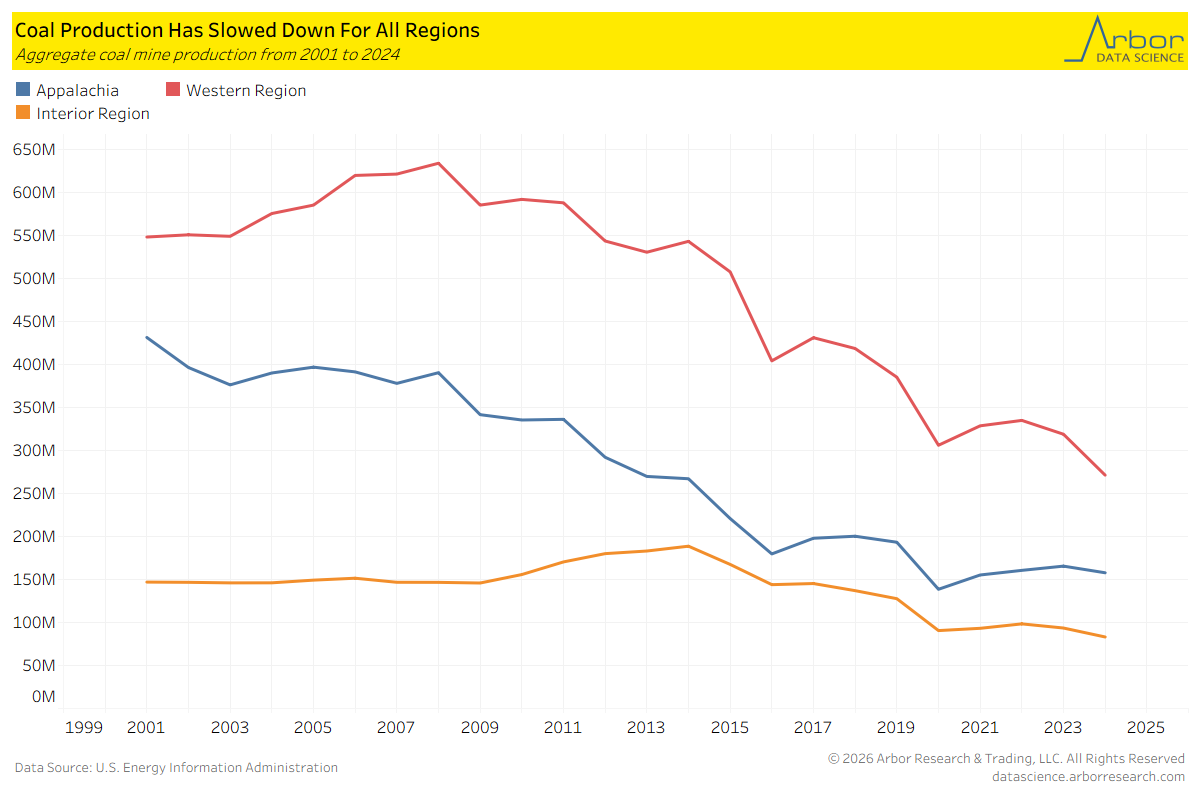
As usage has fallen, so has production. Since 2000, the Appalachia, Western, and Interior regions have all decreased output. The Western and Appalachia regions had much more substantial contracts relative to the interior region, likely due to the interior region’s higher dependance on coal.
As defined by the EIA: Appalachian region includes Alabama, Eastern Kentucky, Maryland, Ohio, Pennsylvania, Tennessee, Virginia, and West Virginia; Western region includes Alaska, Arizona, Colorado, Montana, New Mexico, North Dakota, Utah, Washington, and Wyoming; Interior region includes Arkansas, Illinois, Indiana, Kansas, Louisiana, Mississippi, Missouri, Oklahoma, Texas, and Western Kentucky.
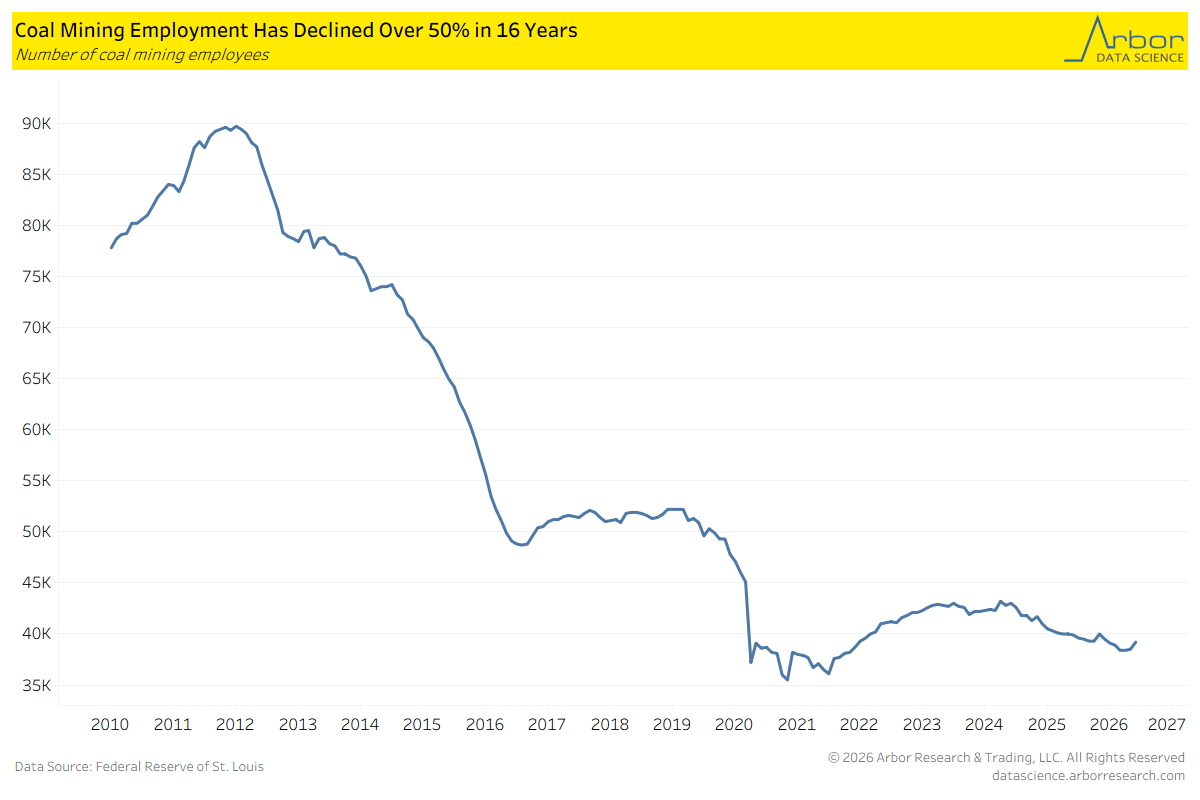
As production falls, so has employment. From 2010 to 2026, employment peaked at the start of 2012 before rapidly declining. Employment in June 2026 was 39,200, marking a 56.3% decline in 14 years.
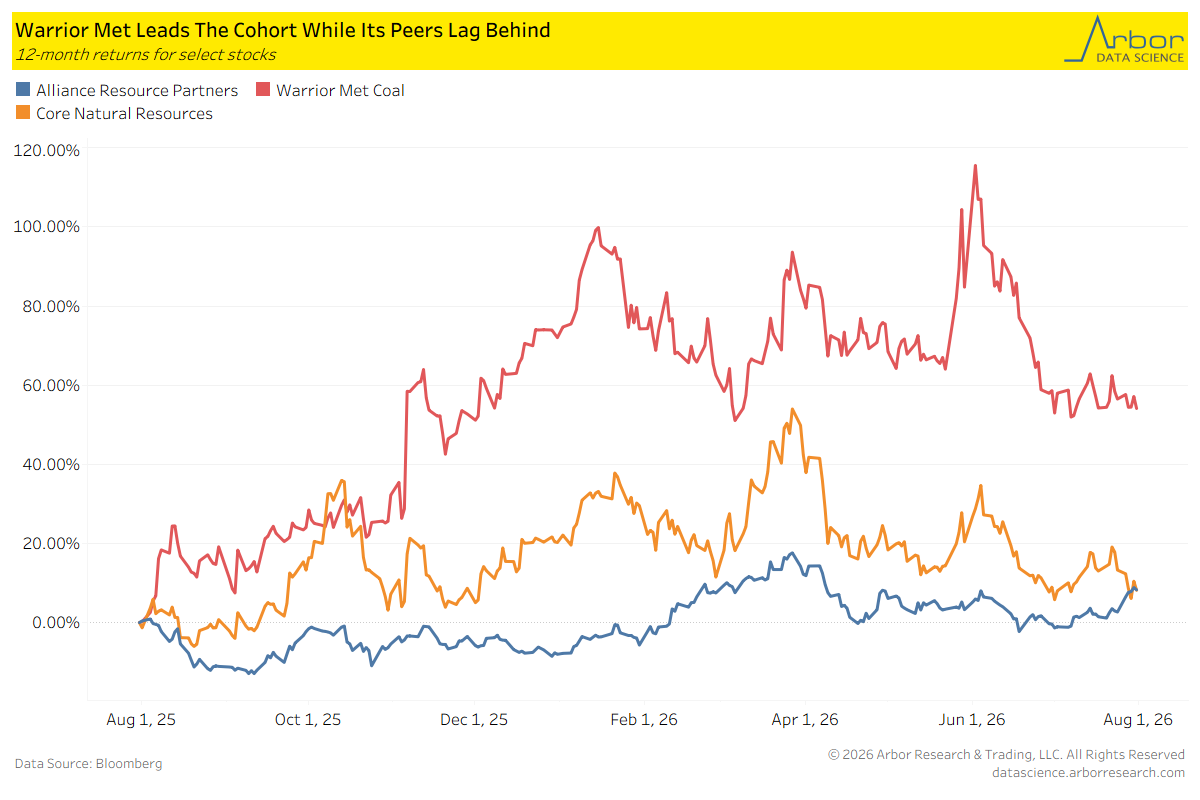
While coal’s share of the energy mix continues to decline, one stock has emerged as a winner. Warrior Met Coal had a 12-month total return of 54.1%, well above the other coal-related firms. Warrior Met Coal’s business model is tied strictly to metallurgical coal (i.e. supplying coal for the steel industry rather than for energy generation) which is likely a key factor in its stronger performance in light of the aforementioned headwinds.
Meanwhile, Core Natural Resources produces both metallurgical and thermal (i.e. coal for energy generation) coal, and Alliance Resource Partners is primarily a thermal coal provider. The two had returns of 8.15% and 8.28%, respectively, severely underperforming both Warrior Met Coal and the broader stock market over the respective time frame.