Uncle Sam Continues to Help out American Farmers
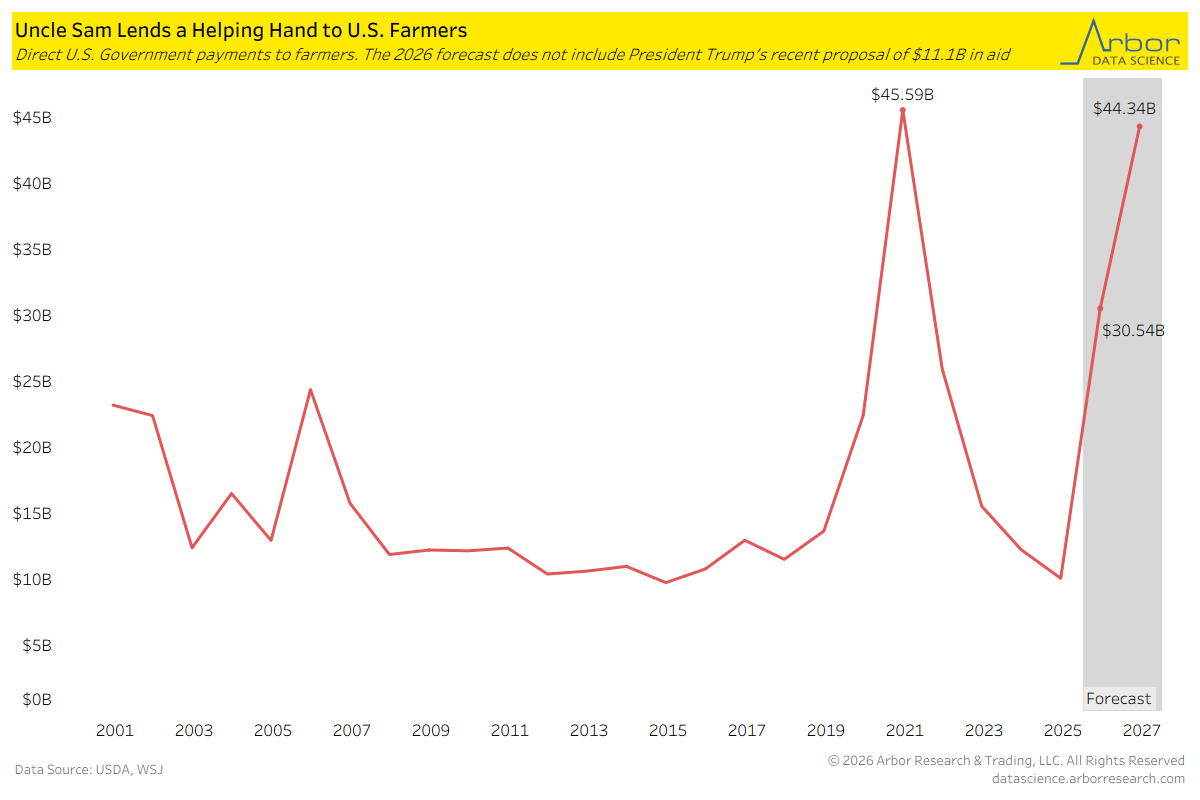
- On 6/25/2026, President Trump announced that he would ask Congress for $11.1 billion of aid for U.S. farmers.
- Before this recent announcement, the USDA forecast that the Federal Government would provide $44.34 billion of direct payments to American farmers in 2026.
- If the $11.1 billion aid package gets through Congress, the 2026 total of direct aid given to farmers would be the most on record, surpassing the $45.59 billion sent in 2020.
Checking in on the Condition of Cash Crops
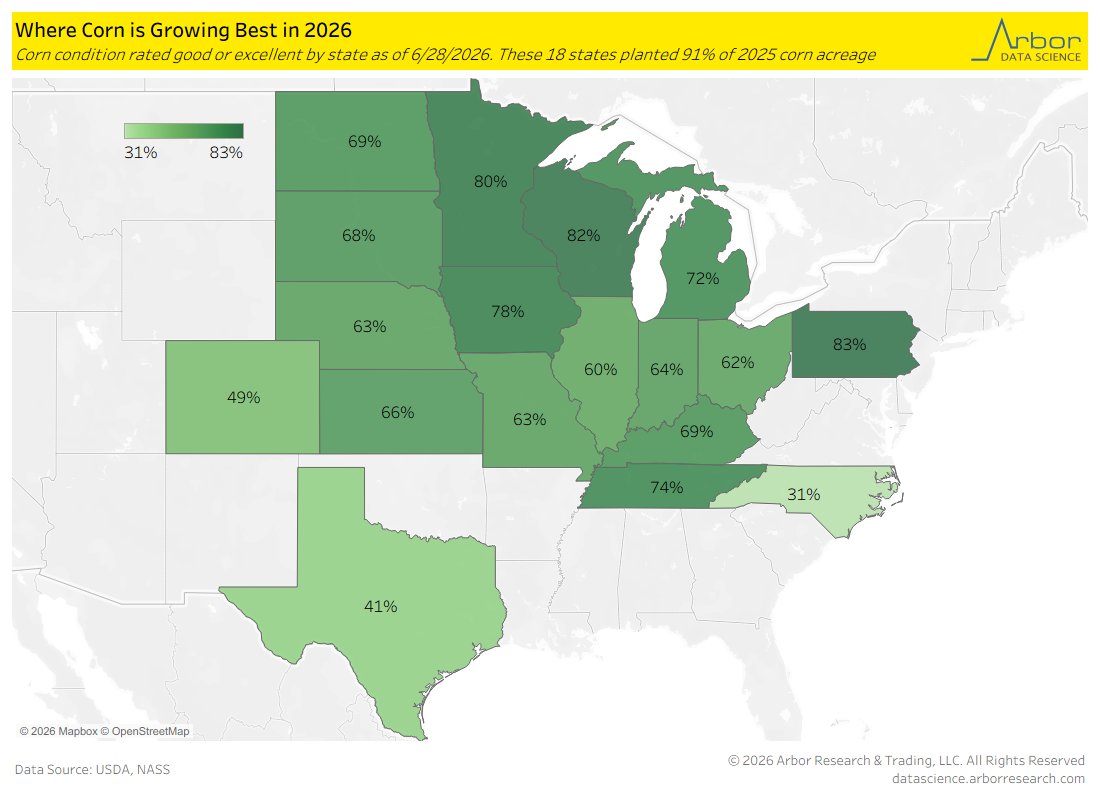
- According to the weekly Crop Progress report published by the USDA, 83% of the corn crop in Pennsylvania was rated as either good or excellent in the week ended 6/28/2026. This was the highest positive share of any state.
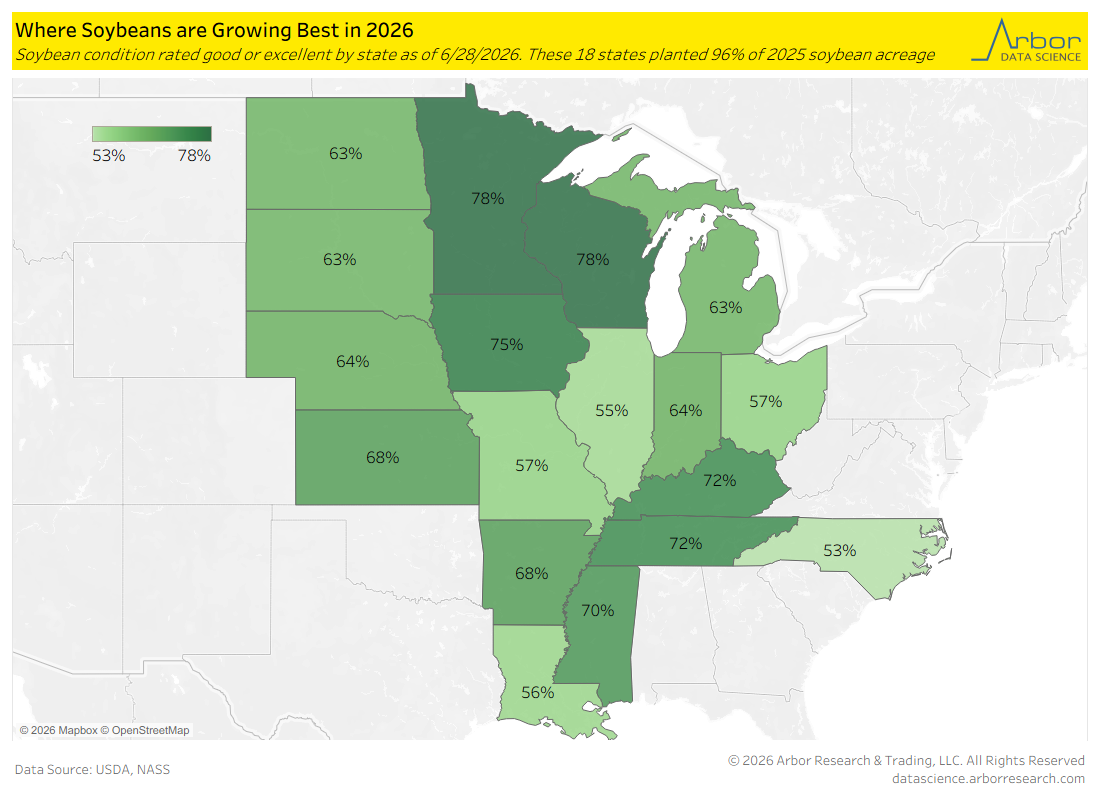
- For soybeans, 78% of the current crop in both Minnesota and Wisconsin was rated as either good or excellent in the week ending 6/28/2026, which was the joint-highest share.
Ag Economy Barometer has Wilted
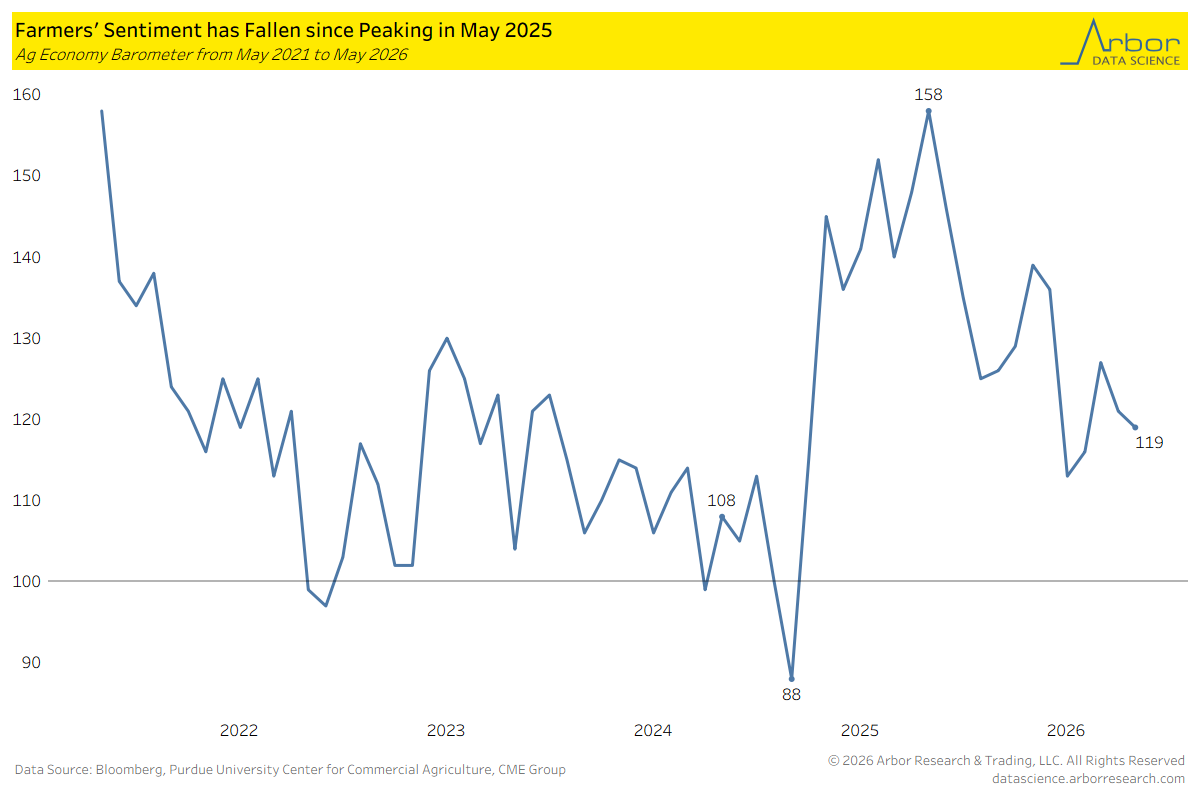
- The Ag Economy Barometer from the Purdue University Center for Commercial Agriculture was 119 in May 2026.
- This was down from the recent peak of 158 recorded in May 2025, but was up from a reading of 108 in May 2024.
Unrelenting Growth in Farm Sector Debt
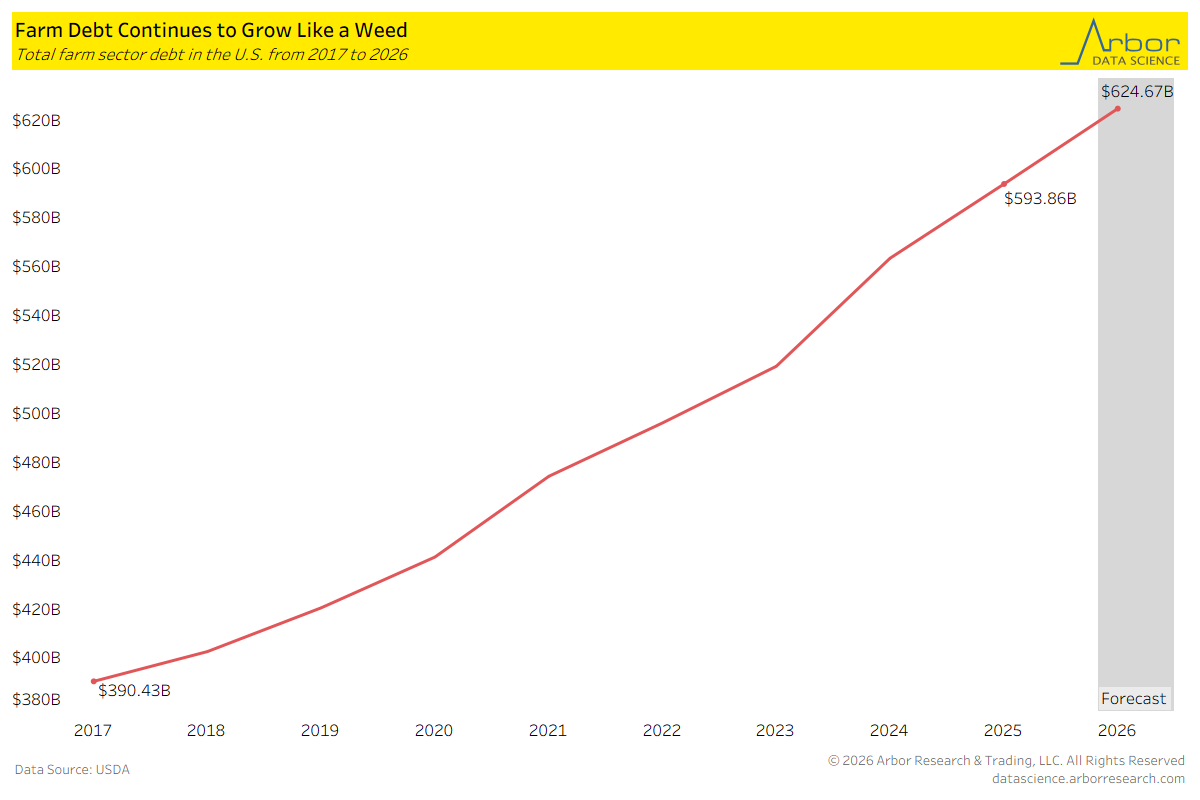
- The USDA forecasts that total farm sector debt in the U.S. will total $624.67 billion in 2026.
- This would be an increase of $30.81 billion from the 2025 total of $593.86 billion, and an increase of $234.24 billion from the 2017 total of $390.43 billion.
High Input Costs Weigh on Farmers
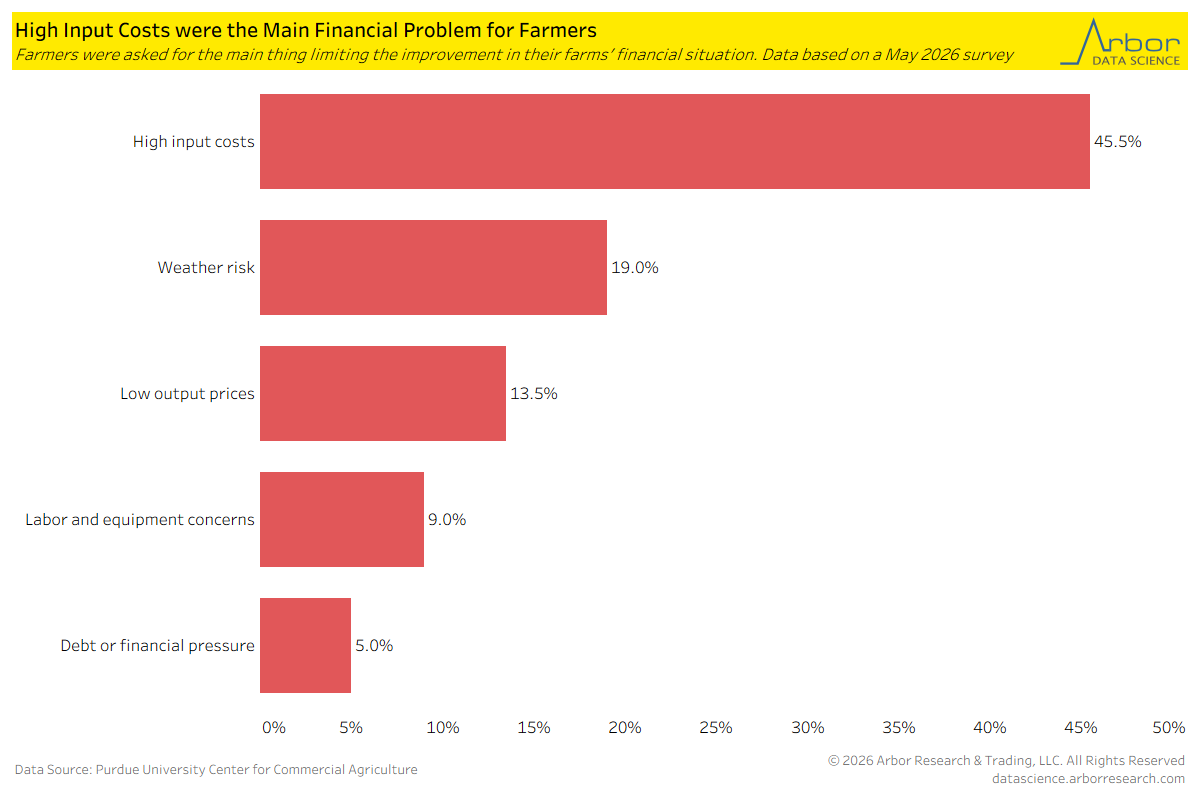
- According to the May survey conducted by Purdue University Center for Commercial Agricultuture, 45.5% of U.S. farmers stated that high input costs were the main factor limiting the improvement of their farms’ financial situation.
- Despite the increasing debt in the sector, only 5.0% of farmers listed debt or financial pressure as the main factor limiting their farms’ financial health.
Impact of the Iran Conflict on Farmers
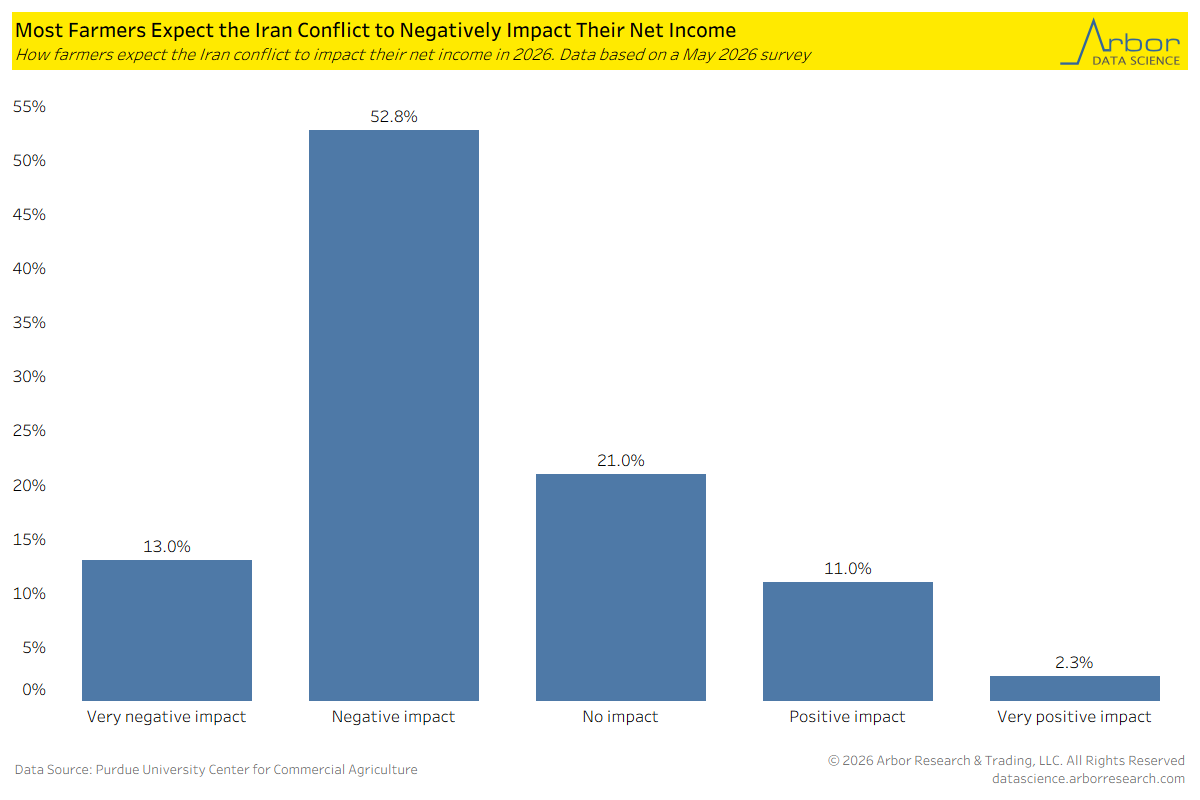
- 52.8% of farmers expect that factors stemming from the Iran conflict will have a negative impact on their net income, and 13.0% expected a very negative impact.
- There was 11.0% that expected a positive impact to their net income as a result of the Iran conflict, and only 2.3% expected a very positive impact.