


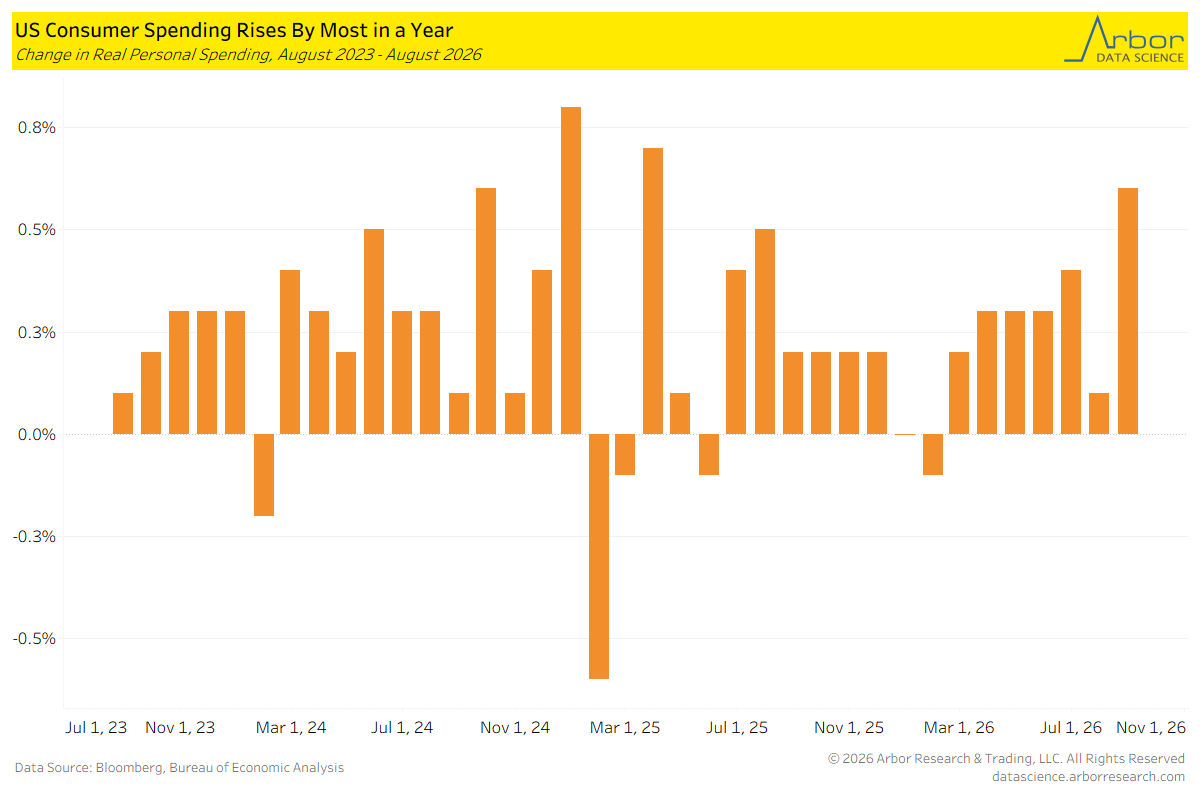
The health of the US consumer has been debated for years. Following the pandemic stimulus, the US consumer was supposedly going to face a long (and painful) hangover. That hangover never (really) happened. Somehow, someway the consumer continued to power through inflation, economic uncertainty, elections, and the list goes on. So, is the US consumer finally going to break?
It does not appear so. Instead, it appears the US consumer is simply continuing to do its thing. And it is curious because the consumer is facing a resurgence of old foes – higher rates and sticky inflation. Normally, that would be a recipe for consumers to pull back a bit. There is very little evidence that is actually happening.
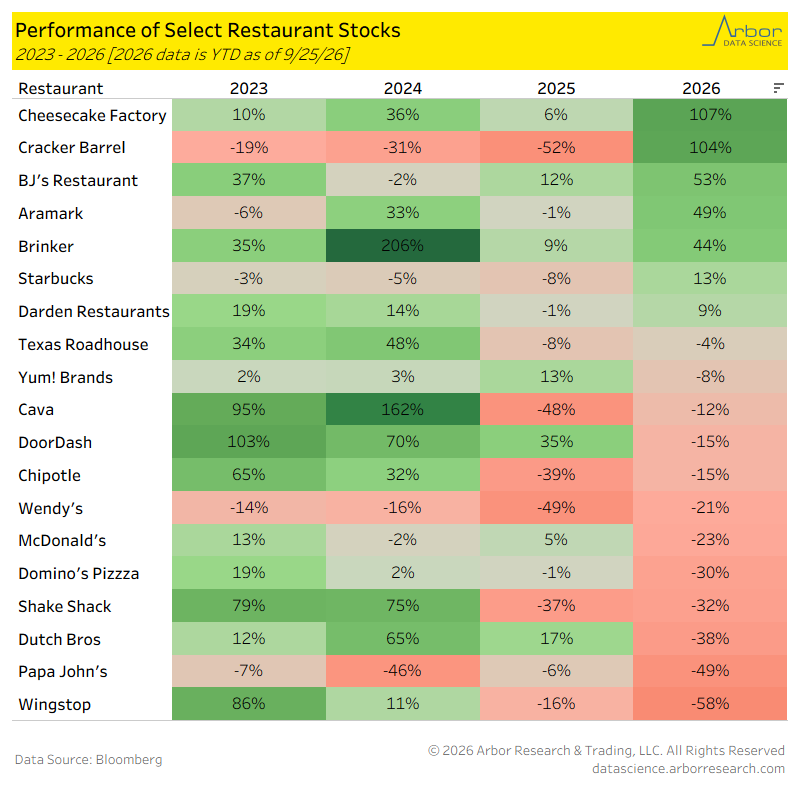
There is a disconnect between the data and some (emphasis on the some) companies though. Many of the publicly traded restaurants have struggled over the past couple of years. But a few have been stellar. Several are easily explainable. If you concentrate on beef, your cost structures have been strained. If you have more flexible menu capabilities, navigating the current environment has been easier.
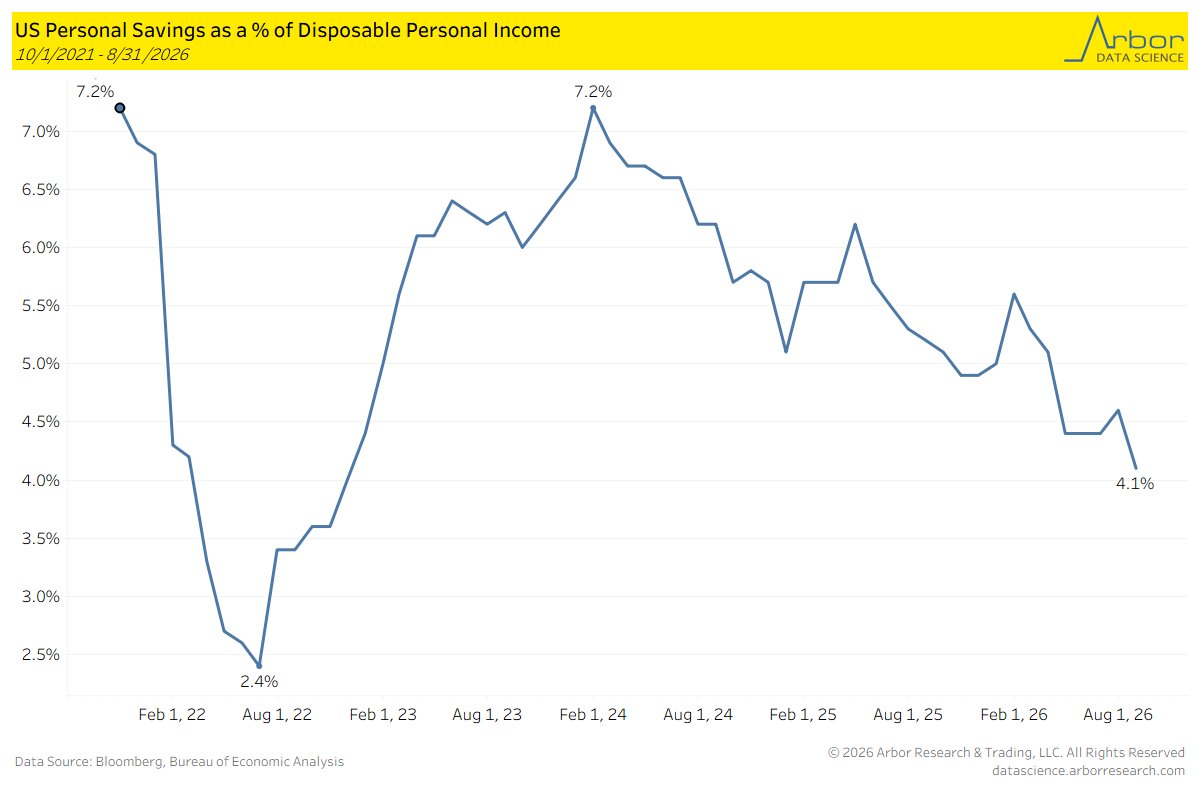
Where is all this spending coming from? Savings is part of the equation. Folks were saving quite a bit following the quirks of the covid recovery. That has dwindled over time. But – and this is something critical – savings as a percent of disposable income remains above 4%. The notion that spending is “dipping into savings” appears to be a bit of an overstatement. Consumers are saving less, and that is not a dire outcome.
Does this limit the ability of the consumer to spend in the future? To a degree. Is the savings rate lower than much of the pre-covid period? Yes. Does that mean the consumer is about to become a headwind instead of a tailwind? Not necessarily. Incomes are also ticking higher. And that is the part of the equation that should not be ignored. Consumers are making more, spending more, and saving less. That does create a lower buffer during a downturn. But the unemployment rate is sitting at 4%. No need to worry about that yet.
Where does that leave the US consumer? In a familiar place. It is not quite overextended, not quite healthy. There are places that could begin to crack. But they have yet to show many signs. Sometimes its best to not question the US consumer. This remains one of those times.