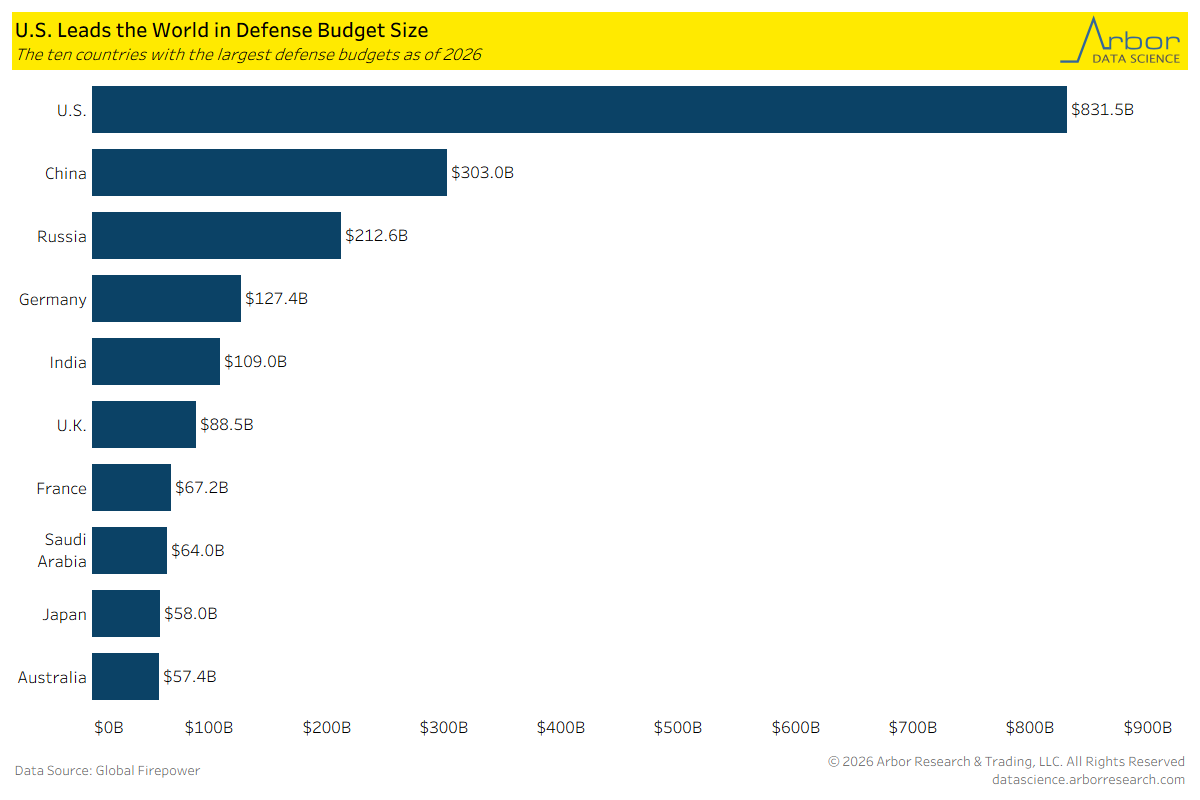
The U.S. Defense Budget has No Peers
- The defense budget for the U.S. is projected to be $831.5 billion in 2026. This is nearly triple the size of China’s defense budget of $303.0 billion, and China has the second-highest level of spending of any country.
- For perspective, the amount the U.S. will spend on defense in 2026 is more than the combined spending of Russia, Germany, India, U.K., France, Saudi Arabia, Japan, and Australia.
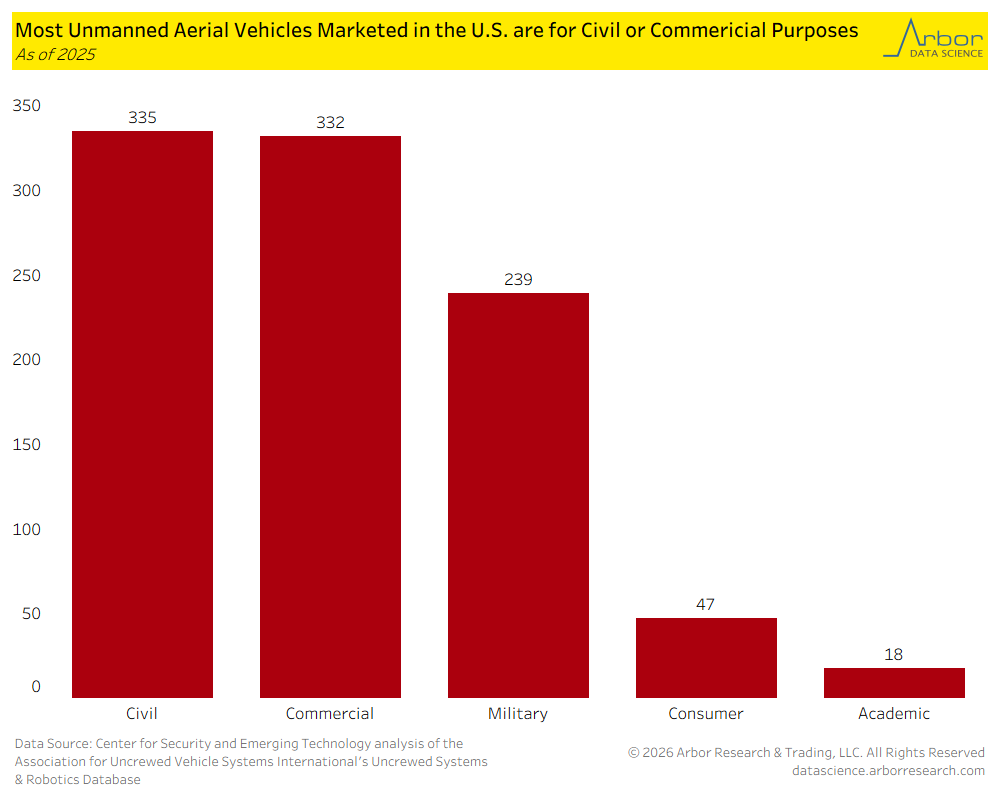
Most Drones that are Marketed in the U.S. are Not for Military Use
- Of the 971 unmanned aerial vehicles (UAVs) marketed in the U.S during 2025, 335 UAVs were made for Civil uses. This can include imaging, surveying, mapping, disaster response, and environmental monitoring.
- 332 of these UAVs were marketed for Commericial uses such as precision agriculture, logistics, and communication.
- There were 239 Military UAVs marketed in the U.S. in 2025, with uses including target acquisition and attack/weapons delivery.
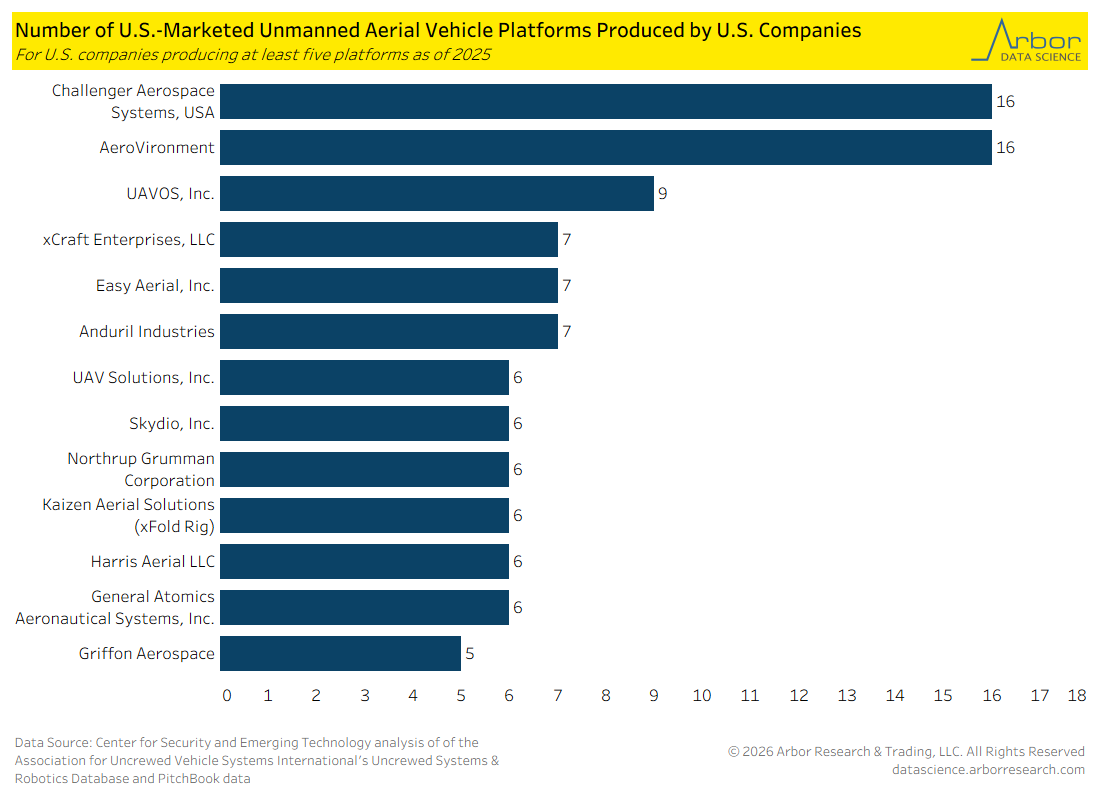
There were 13 U.S.-Based Companies that Produced at Least 5 Different UAV Platforms
- Challenger Aerospace Systems and AeroVironment were the two U.S.-based companies that produced the most U.S.-marketed UAV platforms. Both companies produced 16 unique platforms.
The most Frequent Investors into U.S. UAV Companies
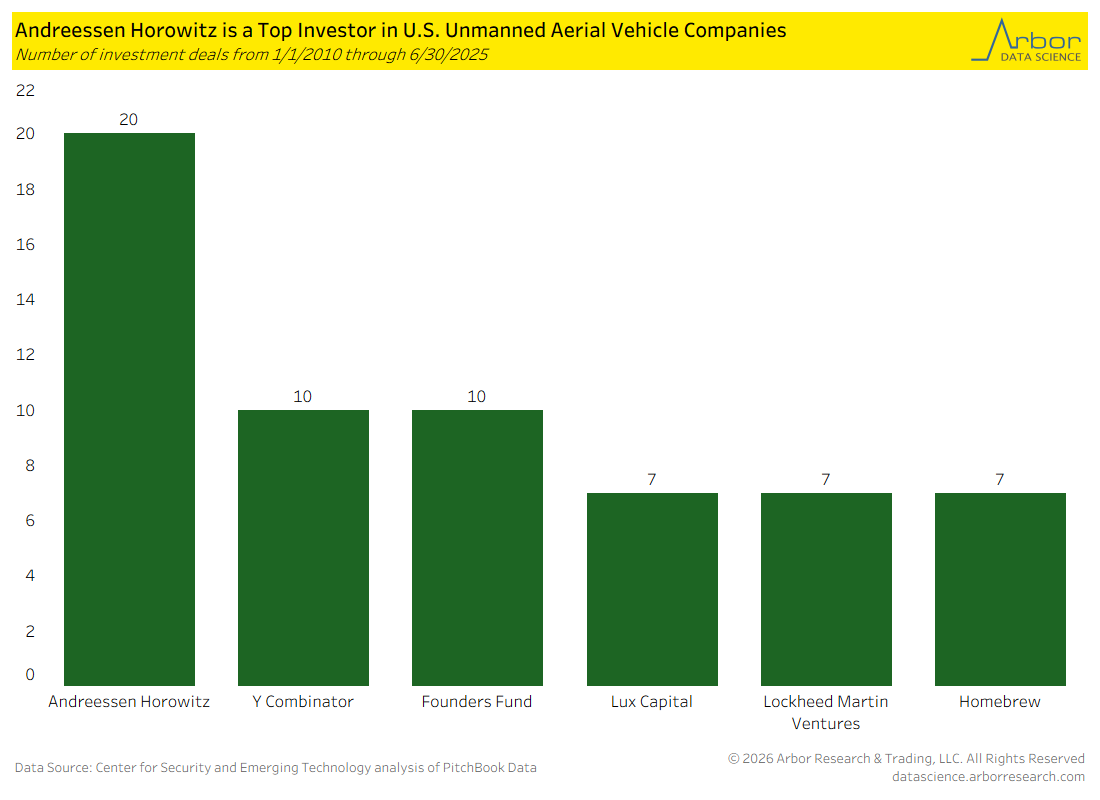
- The venture capital firm Andreessen Horowitz made 20 investment deals into U.S. UAV companies over the period from 1/1/2010 to 6/30/2025. This was the most by one firm of 283 investment deals identified by the Center for Security and Emerging Technology in PitchBook data.
- Lockheed Martin Ventures, an evergreen fund for the defense contractor, had completed 7 deals over the same period. This evergreen fund allows Lockheed Martin to continually invest capital and resources into companies that are creating new technology, such as UAVs.
Returns for Drone ETFs
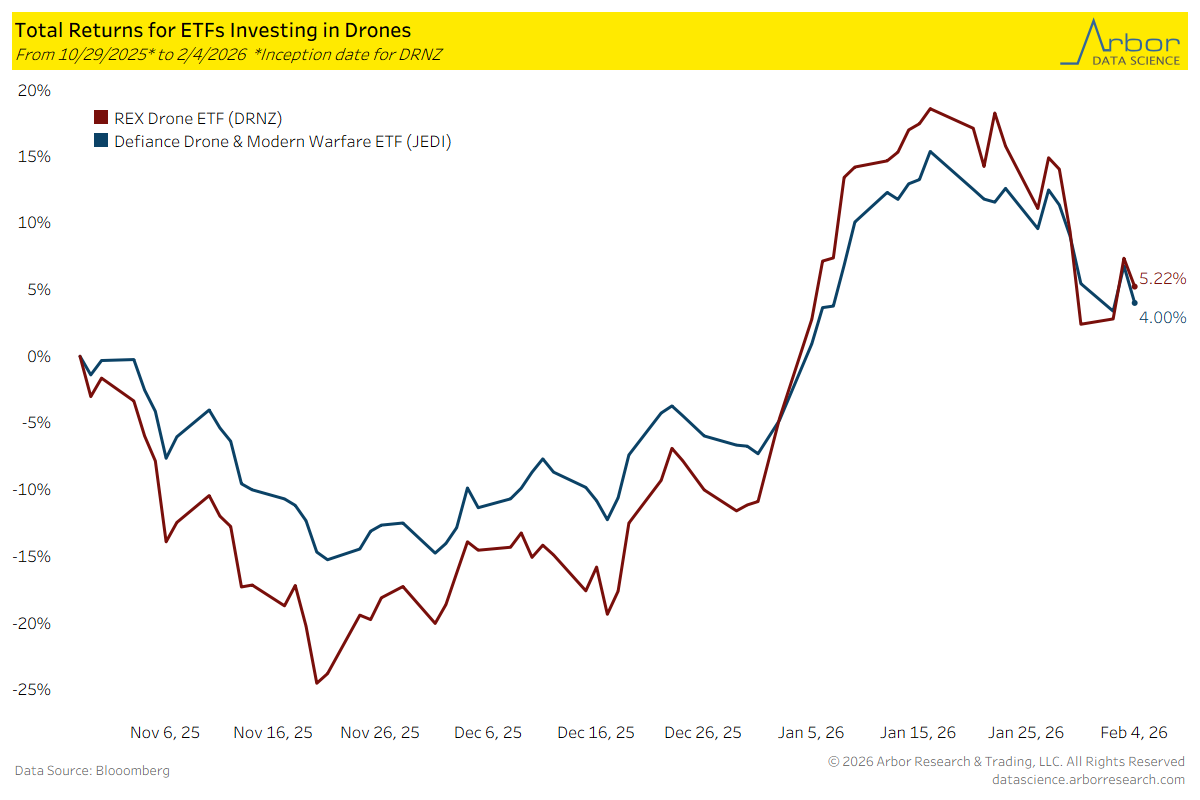
- There were two ETFs launched in the Fall of 2025 that invest in drones and drone warfare: the REX Drone ETF (DRNZ) and the Defiance Drone & Modern Warefare ETF (JEDI). DRNZ was launched on 10/29/2025, and JEDI was launched on 9/26/2025. They both have similar expense ratios, at 0.65% and 0.69%, respectively.
- Since the its launch date, DRNZ has total returns of 5.22%. JEDI has returns of 4.00% over the same period (10/29/2025 to 2/4/2026).