


For the better part of a year, a common refrain has centered around the “sell America” trade. That has expanded from being a predominately tangential conversation to much more mainstream. Concerns arose from what appeared to be a lack of appetite for US debt from countries traditionally holding a significant amount – namely China. But even as Chinese holdings of US debt have declined, other countries have begun to buy more – including the UK and Japan. Belgium – meanwhile – has been increasing its holdings as well (which is a well-known way for China to “hide” its holdings). In essence, that area that sparked concern over the “sell America” trade is not really all that much of an issue. 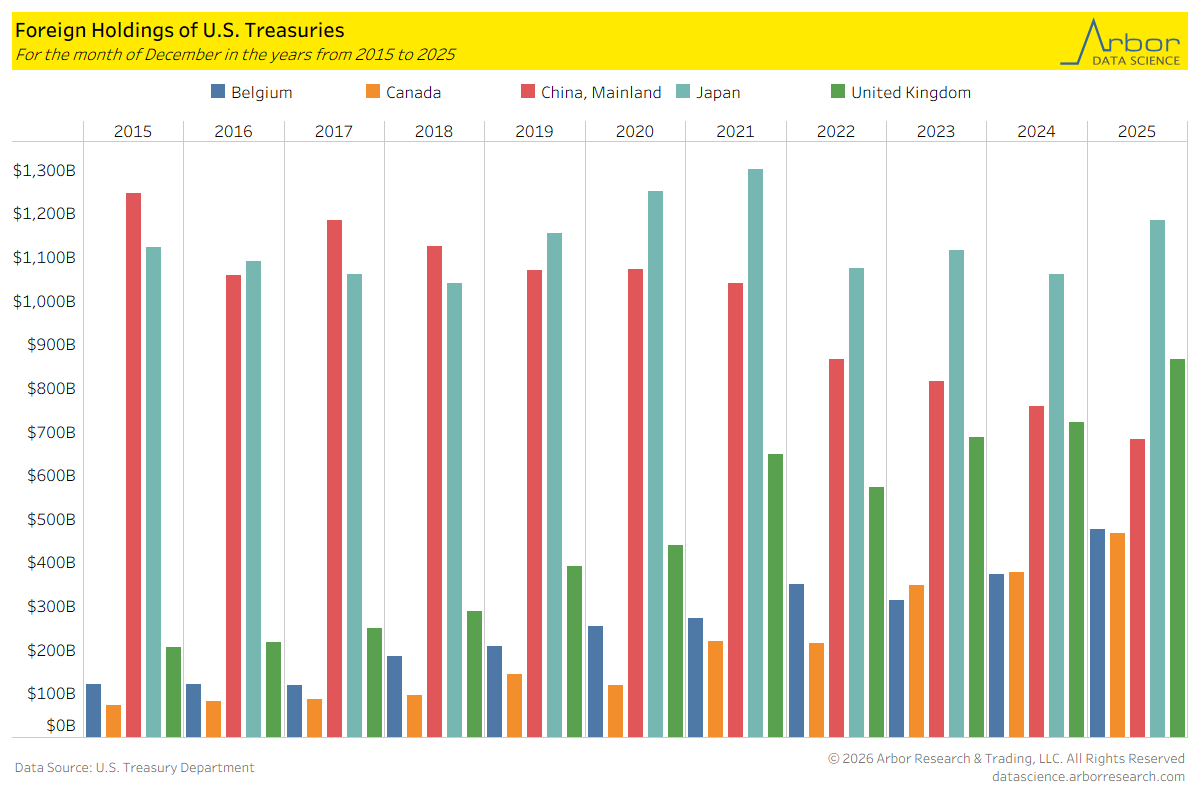
What is far more accurate (and interesting) is the “buy everything else” trade. That should not be overlooked, and it could have legs. South Korea has been on a tear of late as many of its companies find themselves at the center of the AI boom (Samsung being by far the largest constituent in the index). A similar story can be found in Taiwan (TSMC). It is not that the US has done poorly. It is a story of where the returns are even greater, and – in many cases – more concentrated than the US (some countries have single stocks making up almost as much weight in their indexes as the entire Mag7 in the S&P).
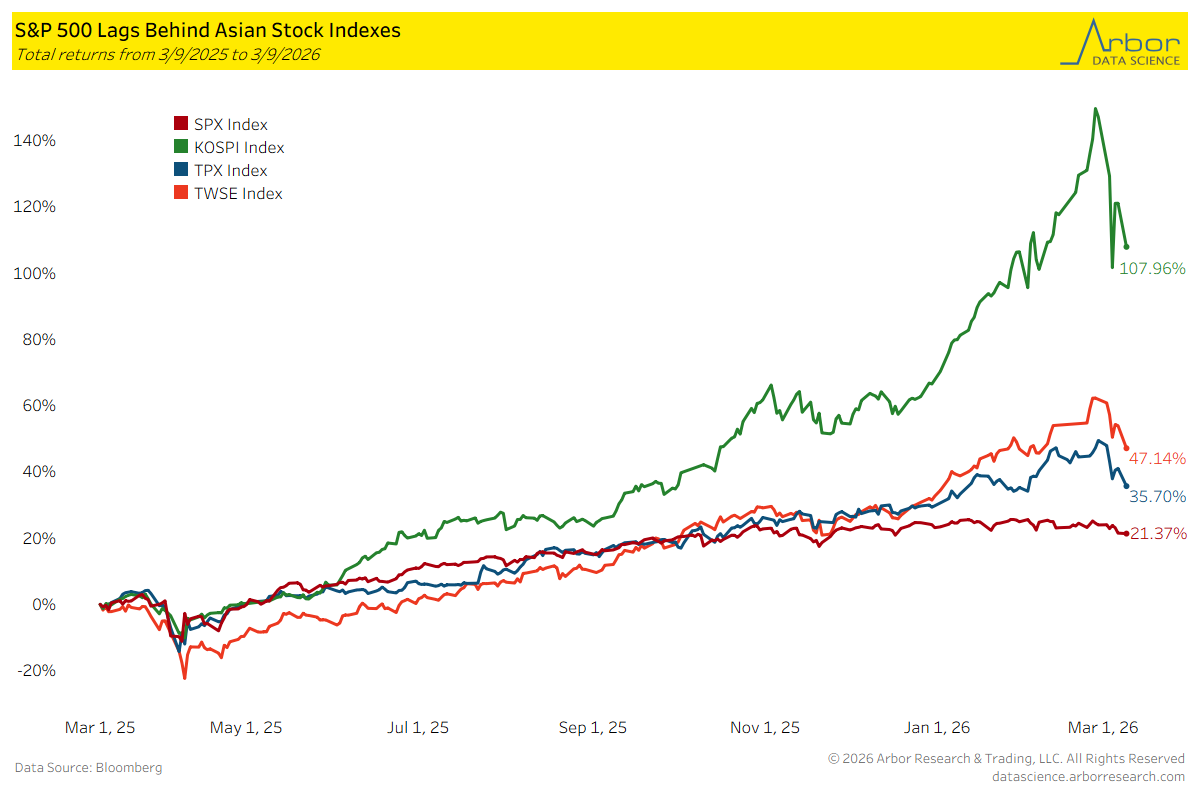
That is part of the reason flows have been moving in the direction of international. Not only is it cheaper than the US, but it entails garnering exposures similar to the US including AI. That creates a sort of perfect storm for non-US equities. When you can find better pricing and better upside potential, that is where flows are going to gravitate. For many managers, having a significant allocation to non-US equities was a headwind for the past decade. Now, any significant allocation has pivoted to a tailwind.
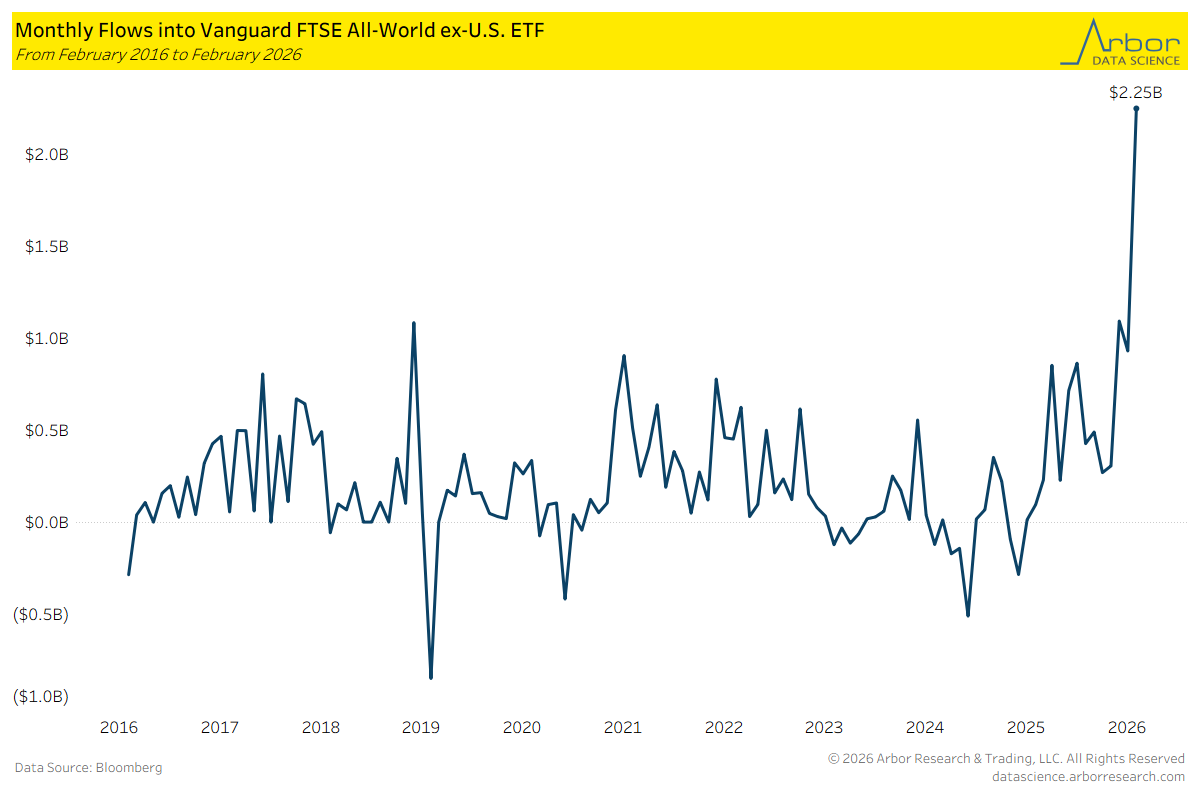
That does not (necessarily) mean that allocating outside of the US is going to become problematic for US equities. But it does mean that allocations to international equities are going to continue to be attractive. The US has dominated flows and returns for quite some time, and international equities have generally been out of favor. That is continuing to change. And – even with the current geopolitics causing some volatility – it is unlikely to reverse anytime soon.