Solar Costs Rise but Remain Below New Gas Generation
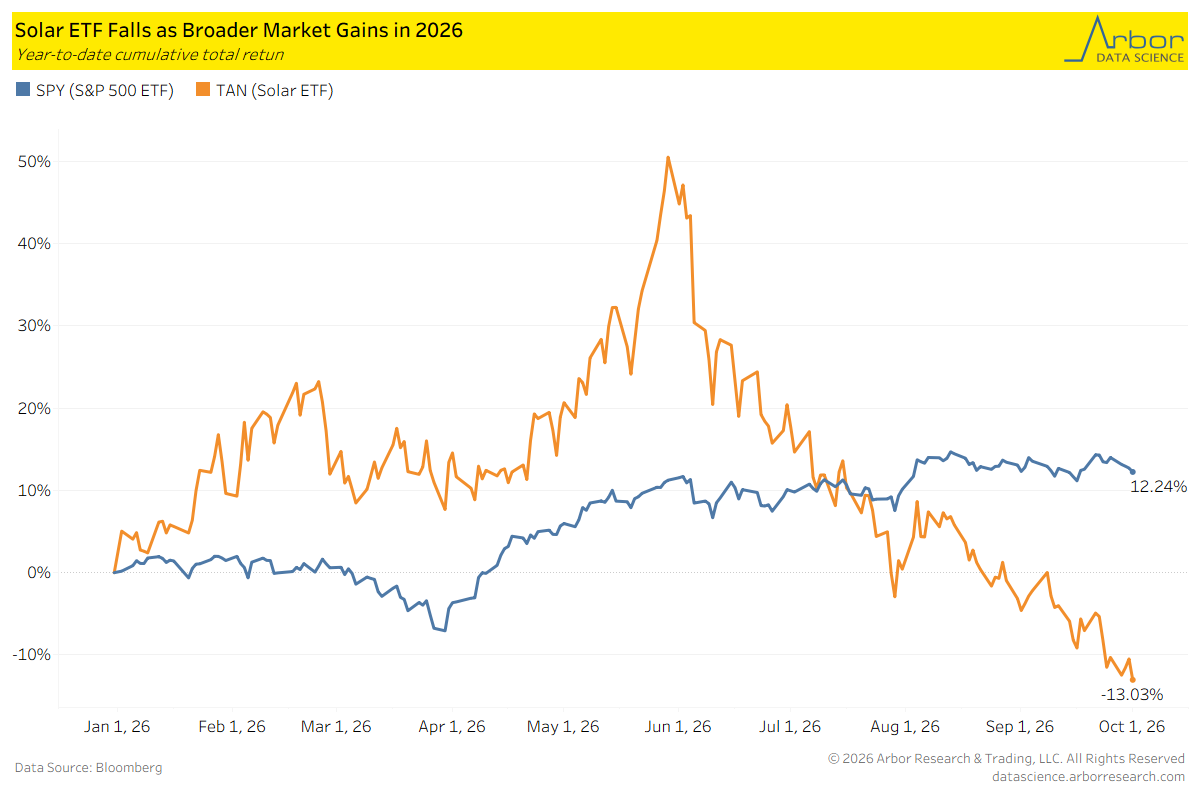
- Solar has become one of the cheapest sources of (new) electricity. According to Lazard, the average levelized cost of electricity from a new utility-scale solar project dropped from $359 per megawatt-hour (MWh) in 2009 to $69/MWh in 2026, a decline of roughly 81%.
- Most of those savings came from the panels themselves. The National Renewable Energy Laboratory found that the cost of panels fell sharply in the 2010s. Lower costs for inverters and other equipment also made solar projects cheaper to build.
- However, solar costs have gone up recently, rising from $58/MWh in 2025 to $69/MWh in 2026. Lazard attributes this to higher project costs, rising interest rates, tariffs, and supply-chain pressures.
- Even with the recent increase, solar is still one of the cheapest sources of power. It remains well below natural gas and only slightly above onshore wind.
Solar Growth Across U.S. States
- According to the Solar Energy Industries Association, the U.S. installed 11.4 gigawatts of solar capacity in the second quarter of 2026. That was an increase of 45% from a year earlier. Most of that growth came from large utility-scale projects.
- The EIA expects U.S. solar generation to grow 21% in 2026 as more of these projects start operating.
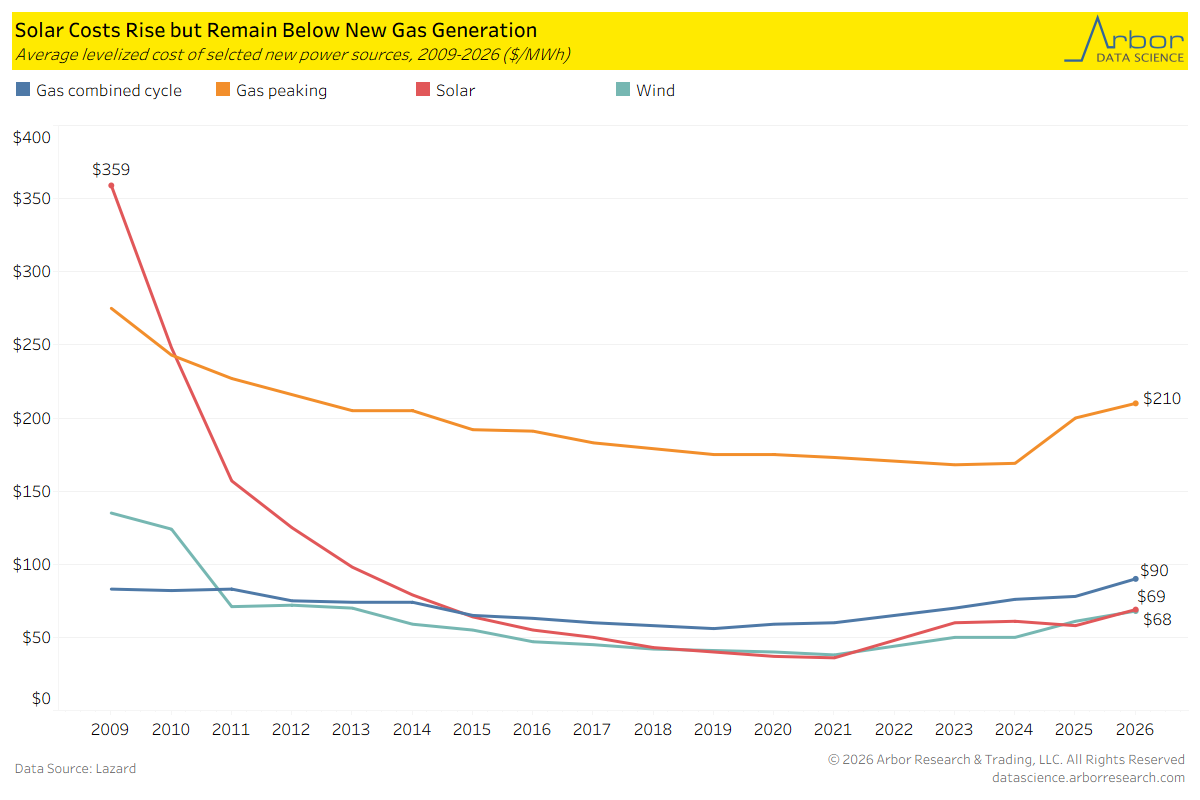
- In some states, solar already produces a large share of the electricity. In July 2026, it made up 41.0% of the power generated in California, 37.1% in Vermont, 32.2% in Massachusetts, and 30.7% in Nevada.
- Solar is also growing in other parts of the country. In the second quarter of 2026, Texas added 1.7 gigawatts of utility-scale solar capacity, Arizona added 1.4 gigawatts, and Michigan added 0.9 gigawatts.
Data Centers Drive Solar Demand
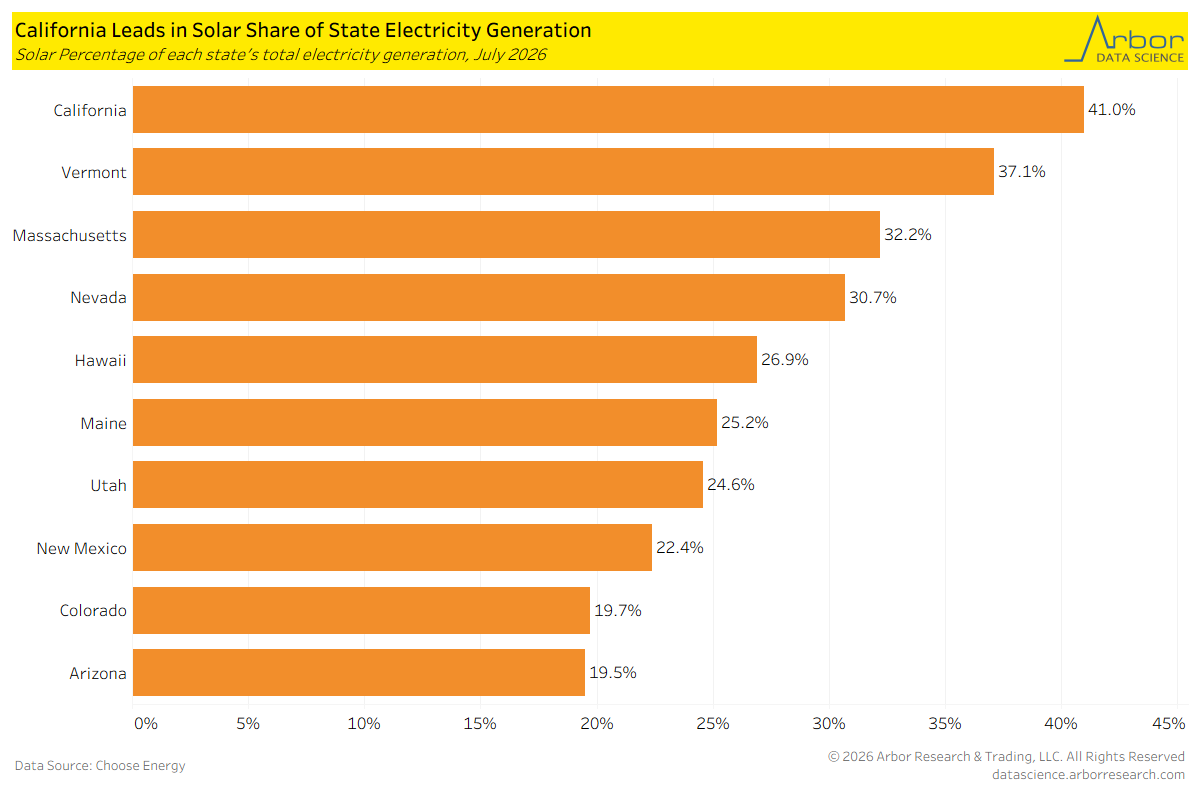
- Large technology companies have become some of the largest buyers of solar power as their data centers require more electricity. BloombergNEF data show that Meta signed agreements for 13.8 gigawatts (GW) of solar capacity in 2025 and 2026, the most of any company. Alphabet, Google’s parent company, followed with 7.5 GW, while Amazon signed agreements for 2.9 GW. These figures reflect capacity under signed agreements, not power already being delivered.
- Both Meta and Google have many solar agreements, but a few stand out for their size. Meta is buying all the power from Enbridge’s 600-megawatt Clear Fork Solar project in Texas. This is a $900 million solar farm built to supply its data centers there. Google’s largest project is the Steel River Energy Center in Arkansas, which is the largest solar project under construction in the U.S.
- Alphabet has also expanded its direct involvement in energy development. In March 2026, Alphabet completed its $4.75 billion acquisition of Intersect, a solar and battery developer.
- Intersect’s Quantum project in Haskell County, Texas, which is a large solar farm with battery storage, began operating in June 2026. It was built alongside a Google data center that remains under construction and is designed to support its future electricity needs.
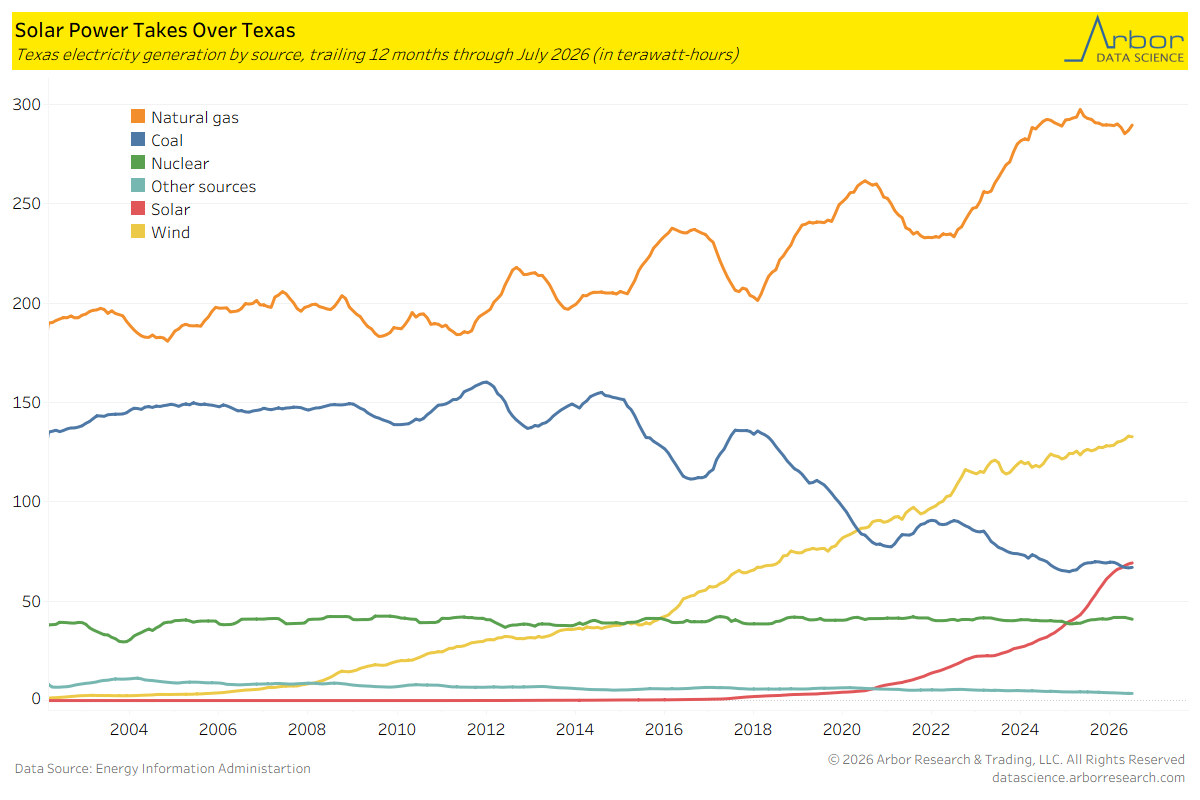
Solar Power Surpasses Coal Generation in Texas
- Texas has the second most solar capacity of any state and added another 1.7 gigawatts in the second quarter of 2026.
- Natural gas is still the state’s largest source of electricity, but solar has grown quickly enough that it surpassed coal generation over the 12 months through July 2026.
- EIA expects 2026 to be the first full calendar year that solar beats coal across most of Texas, generating 78 billion kilowatt-hours versus coal’s 60 billion. It forecasts solar will climb to 99 billion kilowatt-hours in 2027.
- Rising electricity demand is also driving more projects. EIA expects Texas to account for 40% of planned U.S. utility-scale solar additions in 2026.
Solar Stocks Have Lagged the Broader Market
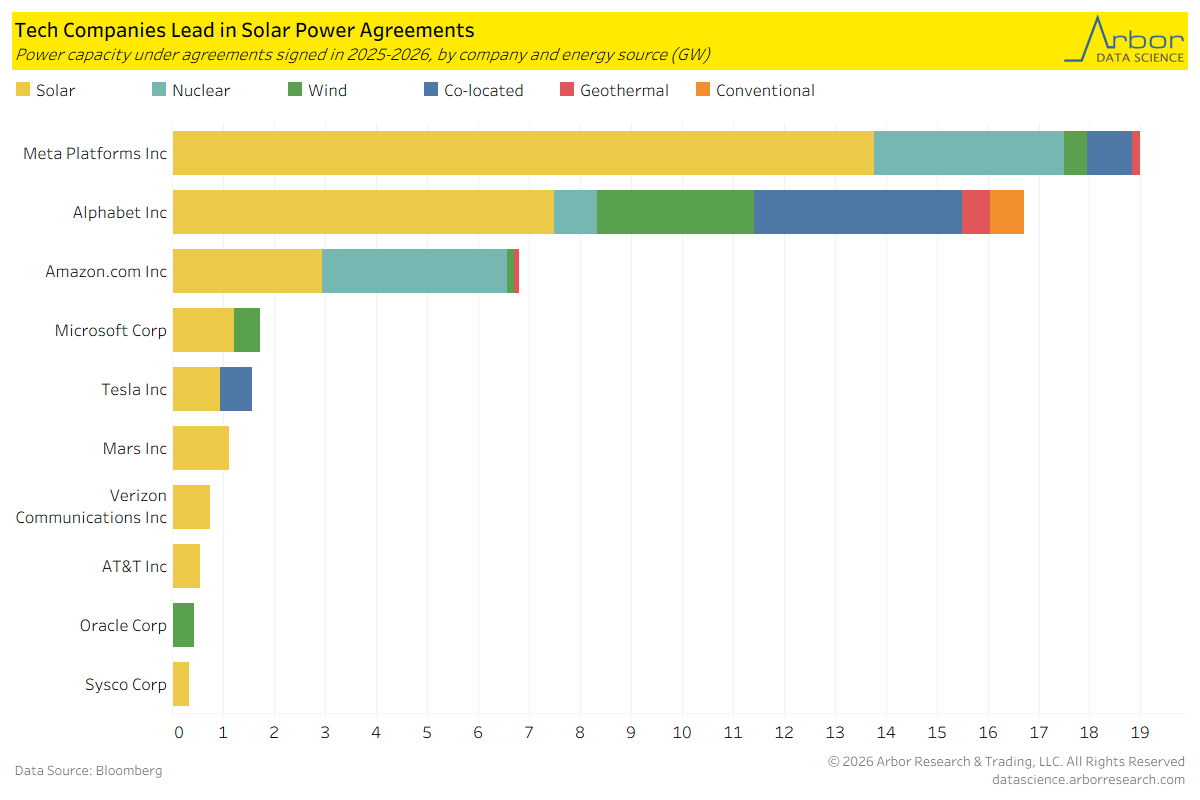
- Despite strong growth in solar generation, solar stocks have underperformed the broader market. The Invesco Solar ETF (TAN), which tracks a basket of solar companies, declined 13% from the start of 2026 through October 1, while the S&P 500 ETF (SPY) returned 12%.
- The gap suggests investors are weighing factors beyond demand for solar power.