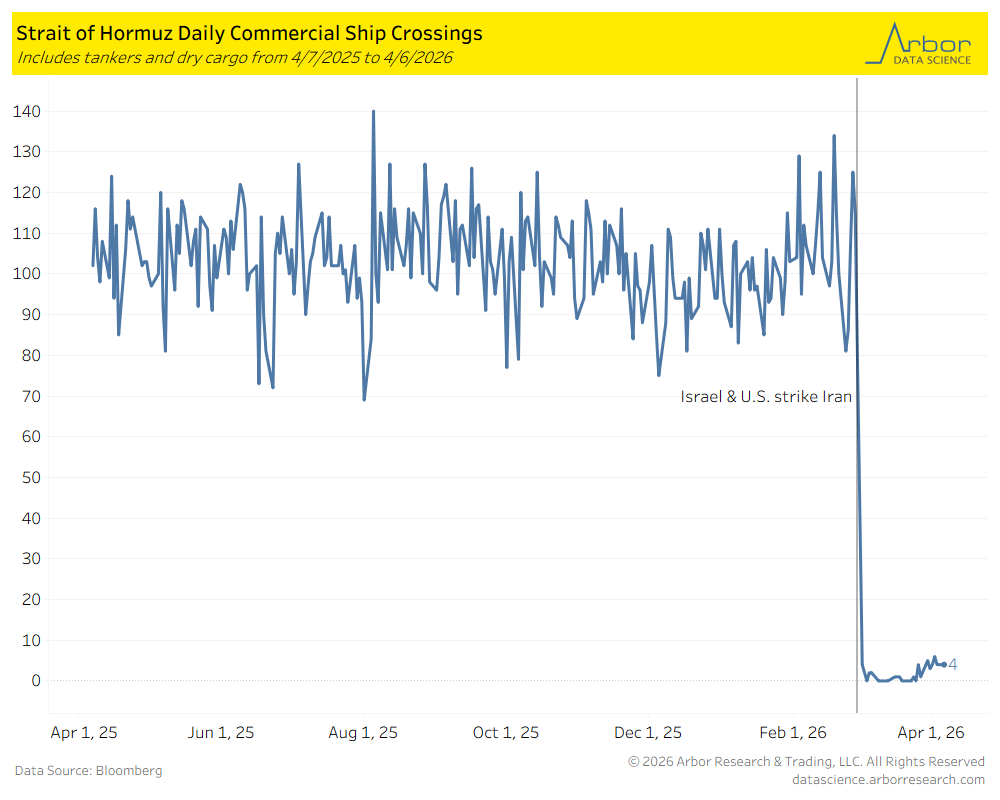
Strait of Hormuz Crossings
- According to Bloomberg Analysis of automatic identification systems (AIS), there were 4 tankers and dry cargo ships that crossed through the Strait of Hormuz on 4/6/2026.
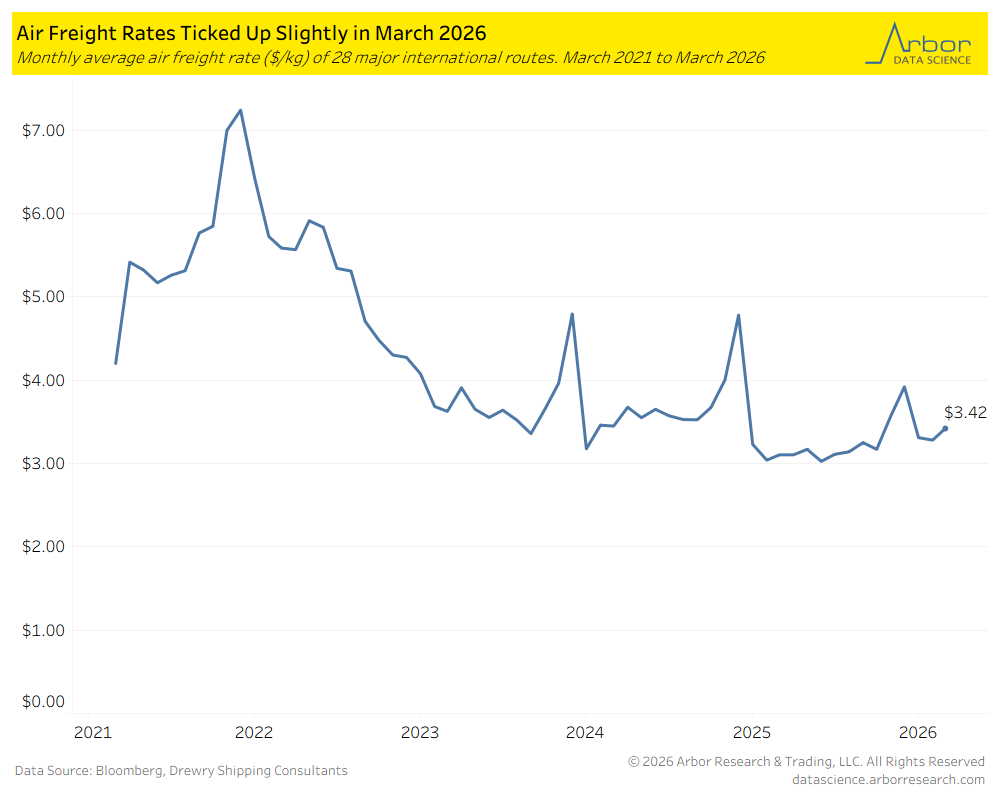
Air Freight Rate was Largely Unchanged in March 2026
- The average rate for global air freight was $3.42 per kg in March 2026. This was a slight increase from the rate of $3.28 in February 2026.
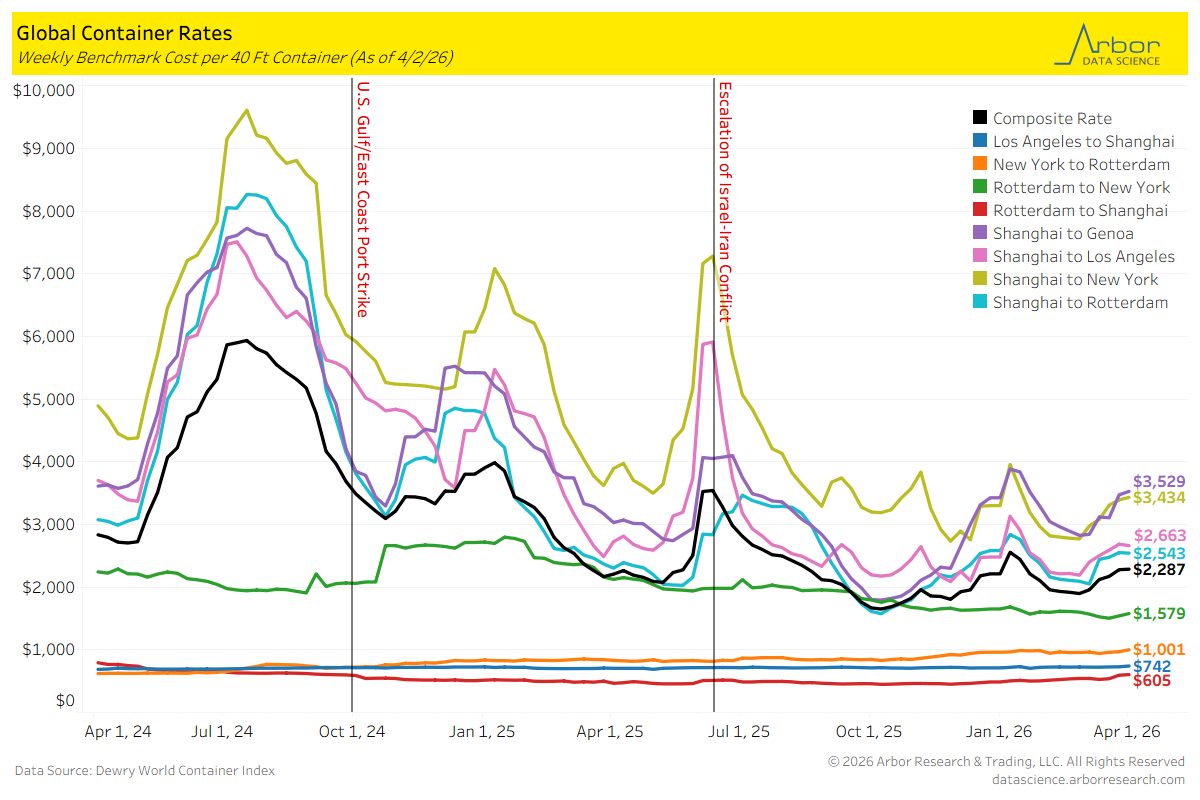
Global Container Rates
- The composite rate per 40-foot container was $2,287 on 4/2/2026, which is up $8 from 3/26/2026.
- Global container rates were mixed from 3/26/2026 to 4/2/2026. The largest increase was from Shanghai to Genoa which increased $55 to $3,529. The largest decrease was from Shanghai to Los Angeles, which decreased $23 to $2,663.
U.S. Trucking Rates
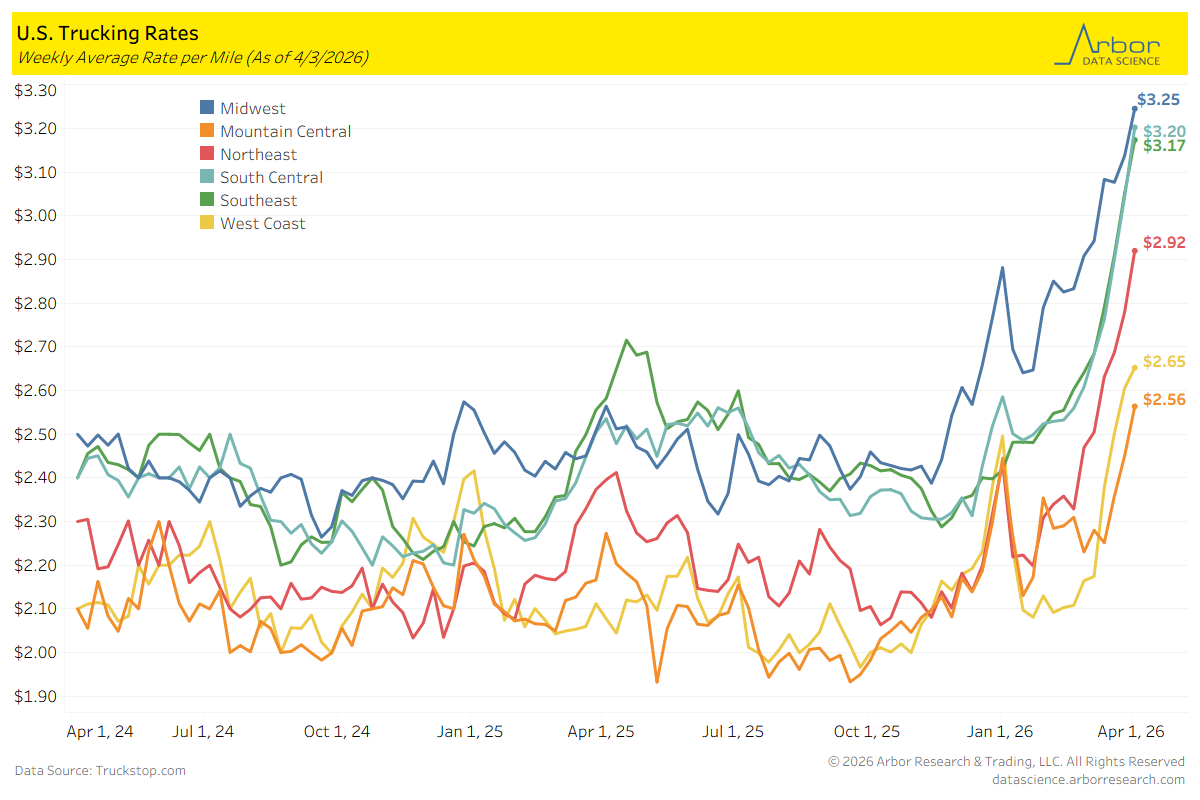
- The Internet Trucks Spot Average Equipment rate was $3.09 per mile as of 4/3/2026.
- Trucking rates for all geographical regions increased over the past week. The rate for the South Central region had the largest increase, at $0.16 per mile.
Suez Canal Crossings
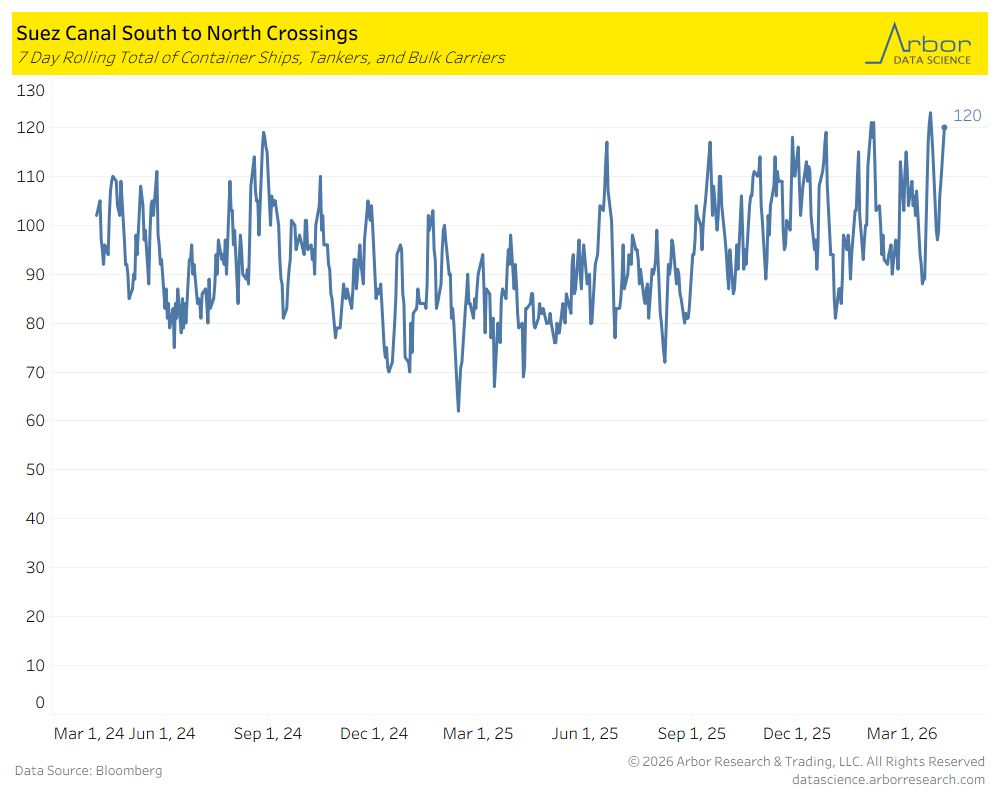
- The chart below outlines the 7-day rolling total of container ships, tankers, and bulk carriers traveling South to North through the Suez Canal.
- The total number of crossings on 4/6/2026 was 120 (compared to 80 on 4/7/2025).
Panama Canal Crossings
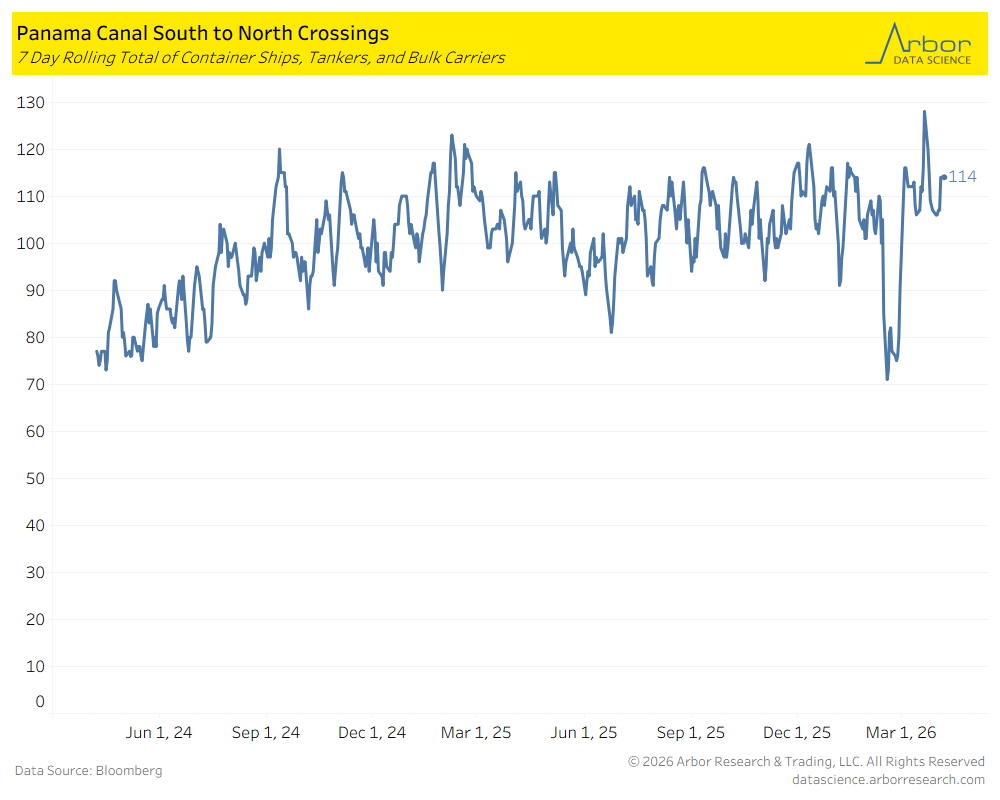
- The chart below outlines the 7-day rolling total of container ships, tankers, and bulk carriers traveling South to North through the Panama Canal.
- The total number of crossings on 4/6/2026 was 114 (compared to 113 on 4/7/2025).
Global Supply Chain Pressure Index
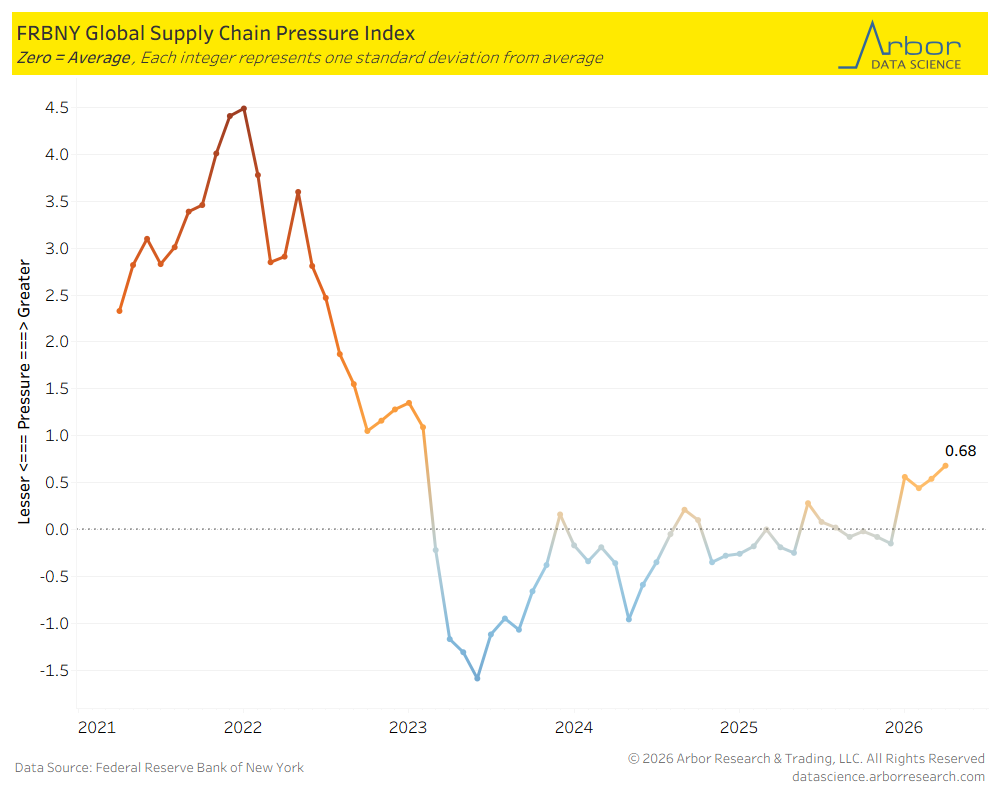
- The Federal Reserve Bank of New York’s Global Supply Chain Pressure Index (GSCPI) increased from 0.54 in February 2026 to 0.68 in March 2026.
Most-Watched Supply Chain Metrics
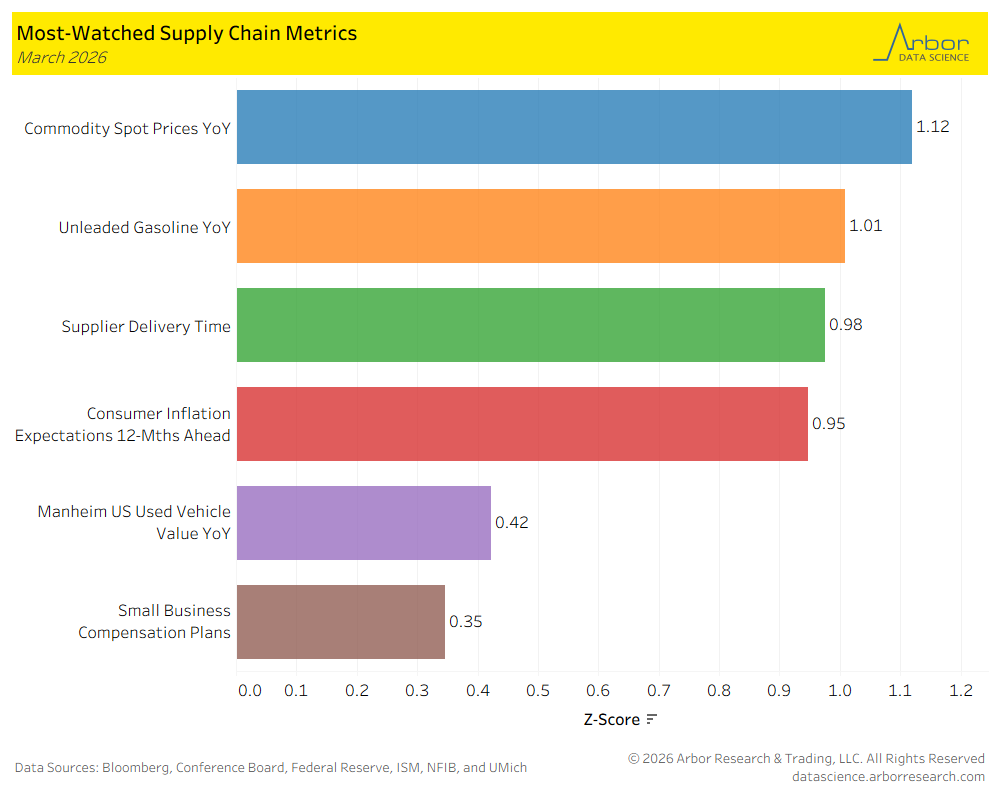
- The chart below is a breakdown of supply chain metrics for March 2026.
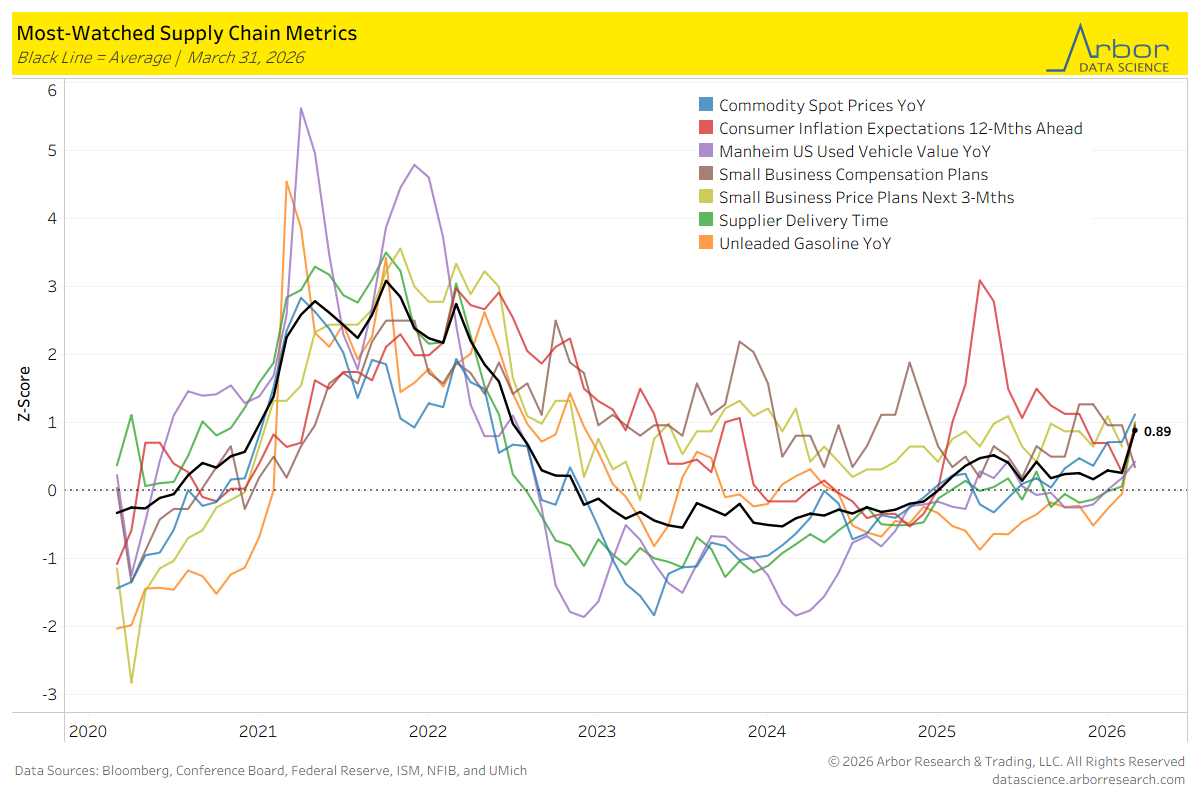
- The aggregate index of most-watched supply chain metrics (the black line in the chart below) was 0.89, with zero meaning the supply chain is acting normally.
Tables